
AI marketing automation uses software and machine learning to capture, score, nurture, and route leads with less manual work. Done well, it helps businesses respond faster, personalize follow-up, and focus sales time on prospects most likely to buy. This guide explains what the technology does, how it supports each stage of lead generation, which tools and workflows to start with, how to measure results, and which risks to manage before you automate.
What Is AI Marketing Automation?
Traditional marketing automation follows fixed rules, such as sending a welcome email when someone fills a form. Adding AI brings prediction and learning, so the system can score leads, choose messages, time contact, and adjust bids based on patterns in data.
HubSpot’s overview of marketing automation lists lead scoring, lead nurturing, and automated follow-up among its core uses, which AI features then refine.
Automation does not replace strategy. It executes a plan faster and more consistently, so weak offers, poor targeting, or messy data produce weak results at higher speed.
How Does It Generate More Leads at Each Funnel Stage?
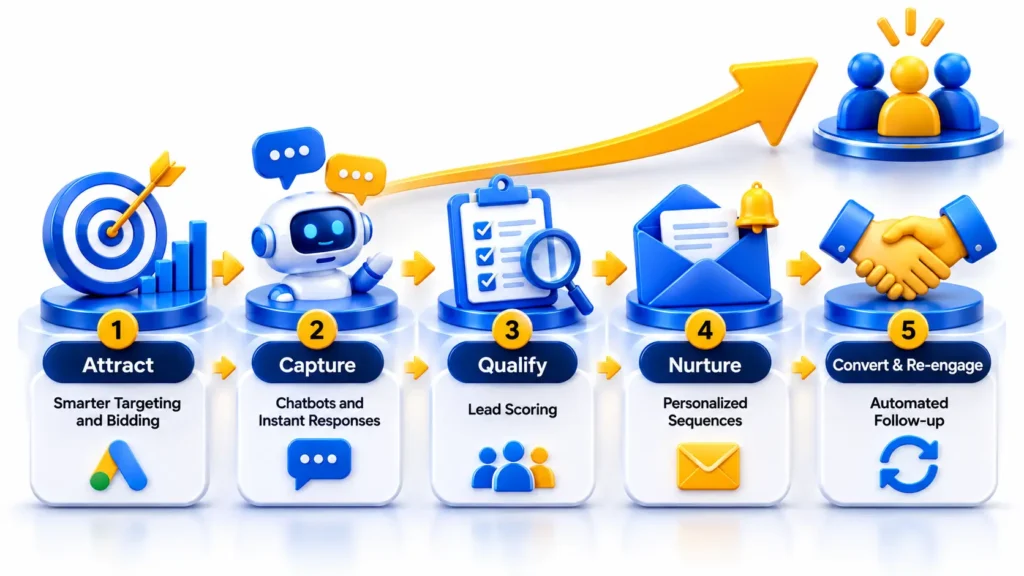
Attract: Smarter Targeting and Bidding
In paid search, Smart Bidding uses Google AI to optimize for conversions or conversion value in each auction. It needs conversion tracking and, for some strategies, enough historical conversion data, so accurate setup matters before you rely on it.
Capture: Chatbots and Instant Responses
Chatbots and messaging assistants answer common questions at any hour, collect contact details, and book appointments. Fast replies matter because interest fades quickly, and automation removes the delay between enquiry and first response.
Qualify: Lead Scoring
Lead scoring assigns points for profile fit and behavior, such as page views, email clicks, and form submissions. Predictive versions use machine learning to estimate which leads resemble past customers, so sales teams contact high-potential prospects first.
Nurture: Personalized Sequences
Workflows send emails, WhatsApp messages, or reminders based on what each person does. A visitor who downloads a pricing guide receives different follow-up from one who only reads a blog post, which keeps messages relevant without manual effort.
Convert and Re-engage
Automation routes qualified leads to the right salesperson, schedules follow-up tasks, and revives cold contacts with timed reminders. Leads can be lost through slow or inconsistent follow-up, so a reliable process can add as much value as new traffic.
Which Lead Generation Tasks Should You Automate First?
Start with repetitive tasks that affect speed and consistency:
- Instant confirmation and welcome emails after every form submission.
- Lead routing to the right team member based on service or budget.
- Reminder sequences for unanswered enquiries.
- Lead scoring that flags active prospects for sales follow-up.
- Retargeting audiences built from site visits and engagement.
- Weekly reports that combine ad, website, and CRM results.
Automate one workflow at a time, test it, and review it with the sales team before adding another.
How Do Use Cases Differ by Business Type?
The best workflows follow how each type of buyer decides.
- E-commerce stores: abandoned-cart reminders, product recommendations, and retargeting based on browsing.
- Healthcare clinics: appointment reminders, enquiry routing, and educational follow-up that respects patient privacy.
- EdTech companies: course enquiry sequences, webinar reminders, and scoring based on content engagement.
- Professional services: nurture sequences with guides, case studies, and meeting booking links.
- Local service businesses: missed-call text replies, review requests, and quote follow-up.
- Startups: lightweight onboarding emails and lead scoring while the customer profile is still forming.
How Do You Write Automated Messages That Convert?
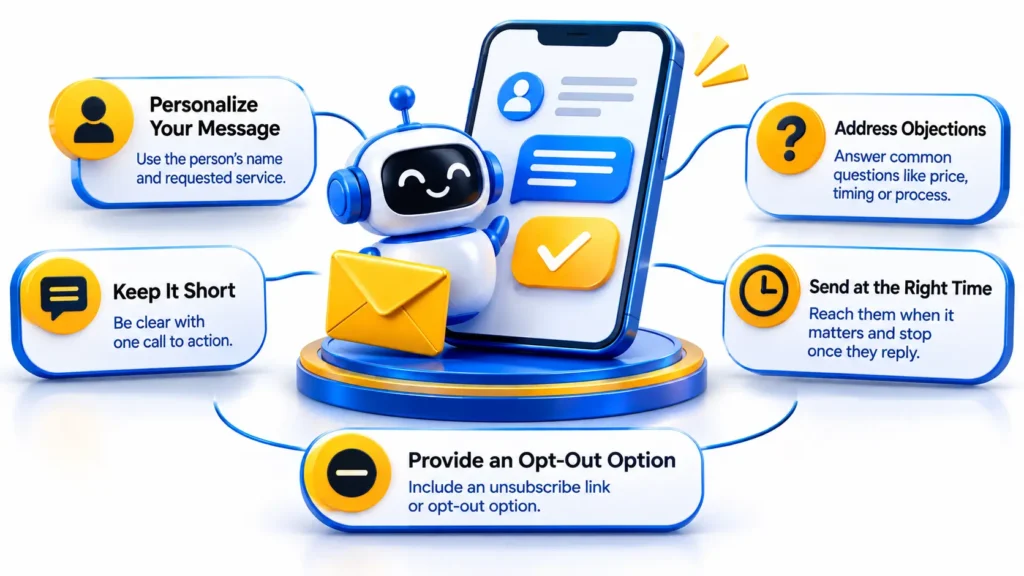
Automated messages should feel helpful, not mechanical. Open with the reason for contact, such as the form the person submitted, and offer one clear next step.
Apply these writing rules:
- Use the person’s name and the service they asked about.
- Keep messages short and specific, with one call to action.
- Answer likely objections, such as price, timing, or process.
- Send messages at useful times and stop when the person replies.
- Include an unsubscribe or opt-out option.
Test subject lines, send times, and offers using A/B tests, and keep a human reviewer for sensitive replies. Clear wording can matter more than complex personalization.
How Does Content Support Automated Lead Generation?
Automation needs assets to deliver. Guides, checklists, webinars, calculators, and case studies give prospects a reason to share contact details and give workflows useful material to send.
Map each asset to a funnel stage. Educational guides suit early visitors, comparison pages and demos suit evaluators, and pricing explanations suit buyers close to a decision.
Search visibility feeds the same system. Helpful pages bring organic visitors into your forms and workflows, which lowers dependence on paid traffic.
What Data and Tools Do You Need?
AI performs only as well as the data behind it. Collect clean contact records, track conversions accurately, and connect your website, ad accounts, forms, and CRM so each lead’s source and outcome stay visible.
A practical stack usually includes:
- A CRM that stores leads, stages, and sales outcomes.
- An email and messaging platform with workflow tools.
- Google Analytics 4 with key events for enquiries, calls, and purchases.
- Ad platform conversion tracking and offline conversion imports.
- Forms, chat, or WhatsApp Business for capture.
Document how each field is collected and keep records tidy: duplicates, outdated contacts, and missing sources weaken scoring and reporting.
How Do You Measure Whether Automation Works?
Measure outcomes, not activity. A workflow that sends many messages proves little unless more qualified leads reach sales and more of them become customers.
- Lead volume and cost per lead by channel.
- Speed to first response.
- Lead-to-opportunity and lead-to-customer rates.
- Email and message engagement, such as replies and clicks.
- Cost per customer and revenue by source.
Compare results with a baseline period, and test one change at a time so you know which change improved outcomes. Our guide to a revenue-focused performance marketing strategy explains how to connect spend to revenue.
Review results with the sales team monthly. Their feedback on lead quality shows whether scores and workflows match real buying behavior.
What Risks Should You Manage?
Privacy and Consent
Collect permission before sending marketing messages, state how you use data, and honor opt-outs. WhatsApp business messaging also requires customer opt-in, so build consent into forms and chat flows.
Quality and Brand Voice
AI-written messages and chatbot answers can contain errors or sound generic. Review templates, restrict chatbots to approved information, and give people an easy route to a human.
Over-Automation
Too many automated touches irritate prospects. Limit frequency, stop sequences when someone replies or buys, and let sales contact high-intent leads personally.
Unrealistic Expectations
No tool guarantees more leads. Results depend on offer, audience, data quality, and follow-up. Treat promises of guaranteed lead volume with caution.
How Should Small and Local Businesses Begin?
Small teams do not need a large platform. Begin with a CRM, a lead form, an automated confirmation, a three-step follow-up sequence, and a simple scoring rule. Add chat or advanced scoring only when volume justifies it.
Local businesses benefit from automating review requests, appointment reminders, and missed-call follow-up. A digital marketing agency in Thrissur can help connect these workflows with Google Business Profile, local landing pages, and ad campaigns. Dotcom Creativez is one of the providers a business can assess for this kind of work.
If leads arrive but few buy, fix follow-up before adding traffic. Our article on why leads do not turn into sales covers common causes, and our guide to Google Ads getting clicks but no leads helps when the problem starts earlier.
For stage-by-stage planning, see our guide to a full-funnel performance marketing strategy.
Frequently Asked Questions About Marketing Automation
Is AI marketing automation worth it for small businesses?
It can be, when the business has enough enquiries to justify setup and a clear follow-up process. Start with simple workflows, measure results, and expand only after they prove useful.
What is the difference between marketing automation and AI?
Marketing automation runs tasks by rules you define. AI adds prediction and learning, such as scoring leads, optimizing bids, or generating draft content. Most modern platforms combine both.
Can automation hurt lead quality?
Yes, if it optimizes toward cheap form submissions or sends irrelevant messages. Train systems on qualified-lead data, use qualifying questions, and review lead quality with sales regularly.
How long does it take to see results?
Simple response and follow-up workflows can show improvements within weeks. Bidding and scoring models need data, so allow several weeks of learning before judging them.
Do chatbots replace sales teams?
No. Chatbots handle first responses and simple questions, but people still handle negotiation, complex needs, and relationship building. A smooth handover to a human matters.
How can businesses in Thrissur start with automation?
Set up a CRM, track calls and forms, and automate instant replies, reminders, and review requests first. Keep Google Business Profile accurate, then add scoring and retargeting as lead volume grows.
Turning Automation Into Qualified Leads
AI marketing automation generates more leads by responding faster, targeting smarter, scoring prospects, and keeping follow-up consistent. It works best on clean data, clear offers, and workflows reviewed with sales. Start small, measure qualified leads and revenue, and manage privacy and quality risks. Businesses that want help building this system can consider providers such as Dotcom Creativez, then choose one that makes no guarantees about lead volume.

The Dotcom Creativez team is a digital marketing team based in Kerala, helping businesses improve their online visibility and reach their target audiences. With over seven years of industry experience within its leadership, the agency provides services including SEO, performance marketing, social media marketing, content marketing, and web development. The team creates strategies based on business goals, audience needs, and market research, with a focus on generating qualified leads, increasing conversions, and supporting measurable business growth.