
Planning content for 2027 means starting from a different baseline. Search results now carry AI-written summaries, buyers compare brands inside chat assistants, and one blog post can no longer hold up a marketing plan alone. This guide lays out a method for building a content marketing strategy that fits any niche: goals first, then audience, pillars, formats, production, distribution, and measurement.
What a Content Marketing Strategy Covers (and What a Calendar Does Not)
A content marketing strategy is a written plan that ties every piece of content to a business goal, a defined audience, and a way to measure the outcome. A content calendar sits inside that plan. It lists dates and owners, while the strategy explains why each topic earned a slot.
Teams confuse the two because a full calendar looks like progress. Output rises and deadlines pass, yet nobody checks whether any of it changed a buyer’s decision.
Ask one question first: what should this content change? The answer might be more qualified enquiries, fewer repetitive support calls, shorter sales cycles, or more repeat orders. Each goal calls for different topics, formats, and success metrics.
How Team Size Changes the Plan
Large organizations often publish from separate departments, so the strategy’s main job is keeping the message consistent. Small teams face the opposite risk. They chase every new format and stretch limited hours across channels they cannot maintain. A written plan protects both from wasted effort.
What Changes When You Plan Content for 2027?
Three shifts matter more than any passing format trend.
- Search results answer more questions directly. Google’s AI Overviews and AI Mode summarize information on the results page, so a page must offer something a summary cannot: original data, documented process, or clear expert judgment.
- Buyers research in more places. Search, video platforms, social feeds, review sites, and chat assistants all shape a shortlist before anyone opens your website.
- Trust signals carry weight. Named authors, cited sources, and transparent business details help readers and search systems judge reliability.
Google’s own documentation supports a calm response. It says AI Overviews and AI Mode need no specific optimization, and it points site owners back to the fundamentals: helpful, people-first content, crawlable pages, strong internal links, and a good page experience. Traffic from these features also appears in the regular Search Console totals. The full details sit in Google’s guide to AI features and your website.
Define Goals and Audience Before Writing a Word
Content built without audience research tends to answer questions nobody asks. Define who the content serves and what that person must decide before choosing a single topic.
A useful buyer profile goes beyond a job title. It records the problem the person wants solved, the words they use to describe it, the sources they trust, and the objections that delay a purchase.
Practical ways to research your audience
- Read support tickets, chat logs, and sales call notes for the exact phrases customers use.
- Study autocomplete suggestions and the “people also ask” boxes for your core topics.
- Ask recent customers what nearly stopped them from buying, and what finally convinced them.
- Check Search Console queries to see which questions already bring visitors to your site.
- Note where the audience spends time: search, video, social platforms, communities, or inboxes.
Attach each goal to a funnel stage. Awareness content answers broad questions. Consideration content compares options and costs. Decision content removes final doubts with proof, clear pricing, and process detail.
Build Content Pillars and Topic Clusters
Scattered ideas produce scattered traffic. Pillars give a plan its spine.
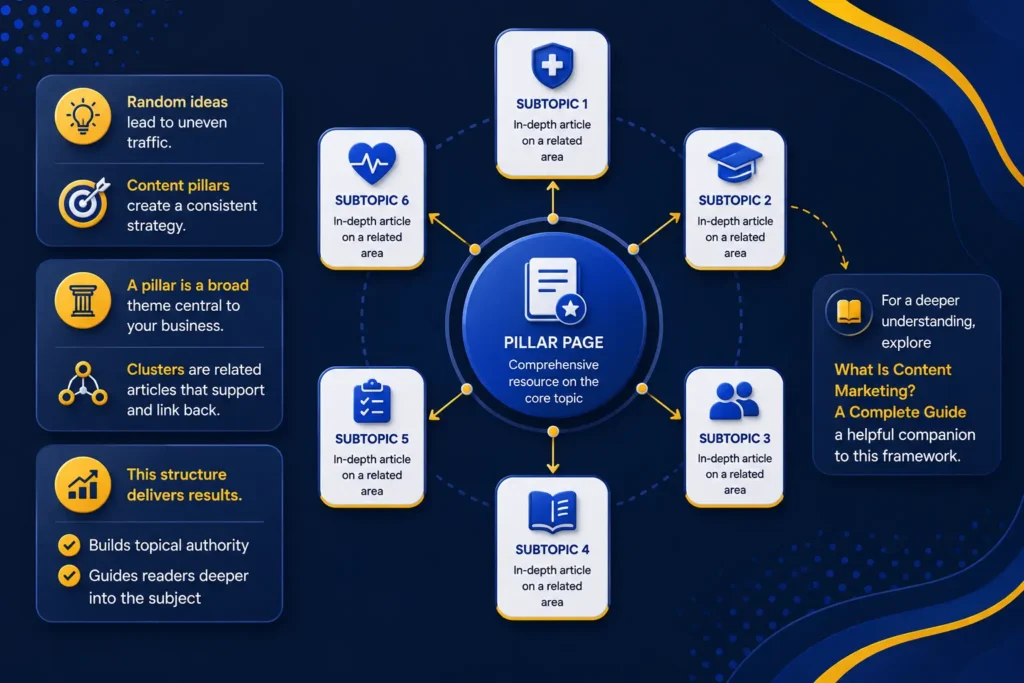
A pillar is a broad theme at the center of what the business sells. A health clinic might choose preventive care, and an edtech company might choose exam preparation. Narrower articles then cluster around each pillar and link back to one central guide. For a deeper definition of the discipline, read What Is Content Marketing? A Complete Guide.
The structure serves two audiences. Search engines see depth across related pages, and readers get a route from first question to final decision. To tie those clusters to sales targets, see our guide to a revenue-focused content marketing strategy.
Match Formats and Channels to Audience Behavior
Not every pillar belongs in a blog post. Demonstrations suit video. Fast-moving industries suit short social updates. Topics that buyers weigh carefully, such as healthcare services or enterprise software, reward long guides with clear structure.
Let audience research choose the channel. A B2B company that pours effort into viral clips while LinkedIn and email sit idle is optimizing for the wrong audience.
Plan a Production Calendar You Can Keep
A calendar turns strategy into a schedule, and this is where most plans break. Teams commit to more than they can produce.
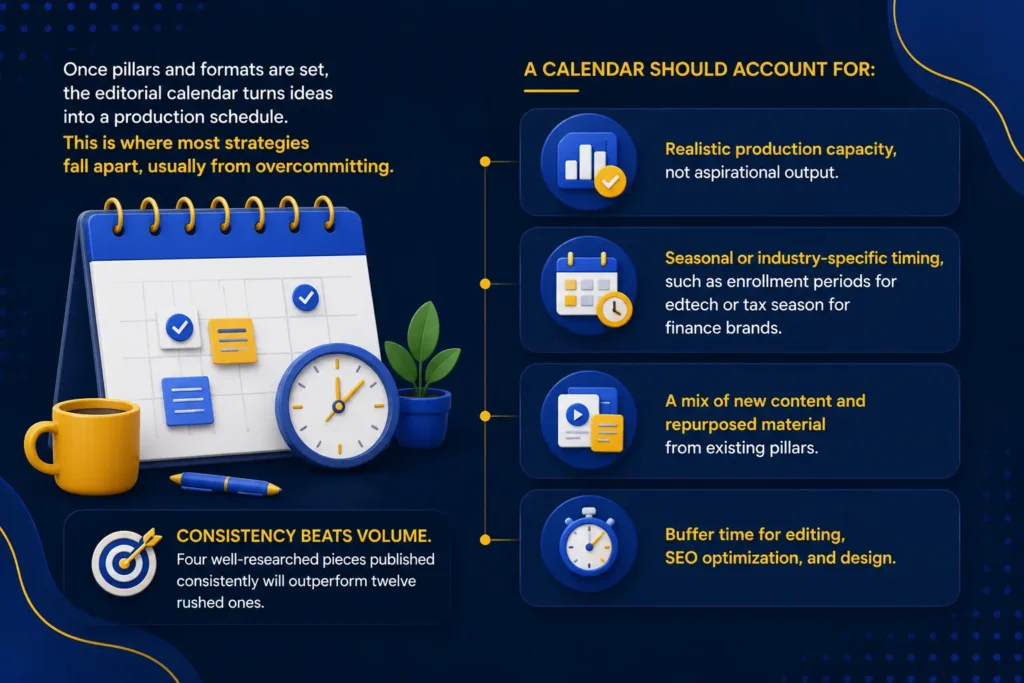
What a realistic calendar includes
- Honest production capacity, based on what the team shipped last quarter.
- Seasonal timing, such as admission cycles for edtech or filing deadlines for finance brands.
- A balance of new pieces and updates to existing pages.
- Time for editing, fact-checking, design, and on-page SEO.
Four researched, well-structured pieces a month usually serve a business better than a dozen rushed ones.
Create Content That Search Engines and AI Answers Can Use
Write each page so the reader finds the answer within the first few lines. Use headings that mirror real questions, state claims with specifics, and name the source of every figure.
Original material gives a page its edge. Survey results you collected, pricing breakdowns, documented processes, and expert commentary offer search systems something worth citing instead of repeating.
Technical basics still count. Keep pages crawlable, link related articles together, describe images with useful alt text, and confirm that structured data matches the visible text.
Distribution and Repurposing
Publishing is half the job. One researched article can feed a newsletter feature, several social posts, a short video script, and the follow-up emails a sales team sends.
Repurposing also spares small teams from starting from zero each week. Refresh evergreen pages with current information, then promote them again.
Measure What the Strategy Delivers
Traffic alone says little. Track outcomes tied to the original goal: qualified leads, assisted conversions, sign-ups from a given pillar, or the time visitors spend on decision-stage pages.
Pair Google Analytics 4 for conversions with Search Console for queries and impressions, then review both against your goals each month.
Audit content every quarter and sort pages into three groups: update, merge, or retire. Refreshing an older page that already holds links and rankings often delivers faster gains than writing a new one.
Common Content Strategy Mistakes to Avoid
- Treating content as a one-off project instead of an ongoing system.
- Copying competitor topics without checking that your own audience searches for them.
- Publishing without a goal, an owner, or a review date.
- Expecting quick ranking jumps, when organic growth usually builds over months.
- Relying on AI drafting tools without human fact-checking and original input.
Frequently Asked Questions
How long does a content marketing strategy take to show results?
Organic traffic usually starts to move within three to six months, depending on competition, site authority, and publishing consistency. Email and paid promotion can produce faster signals.
Do small businesses need buyer personas?
Yes. A small budget leaves little room for content aimed at the wrong audience, so a simple profile of the ideal customer saves money.
How many content pillars should a strategy have?
Three to five pillars cover the core offerings of most businesses without stretching production too thin.
Should content go on every social platform?
No. Pick one or two platforms where the audience already pays attention, and do those well.
How often should the strategy be reviewed?
Review performance every quarter and run a deeper audit twice a year. Search features and platform algorithms change quickly, so a plan needs regular checks.
Do you need special content for AI search features?
Google’s documentation says AI Overviews and AI Mode need no specific optimization. Focus on helpful, original, well-structured pages and sound technical health.
Putting the 2027 Plan Together
A working content strategy ties goals, audience insight, and steady production into one system. Set the goal, map the audience, build pillars, schedule only what the team can deliver, and review results every quarter. Dotcom Creativez builds structured plans like this for businesses across sectors, and teams comparing a digital marketing agency in Thrissur can use the steps above to evaluate any proposal.

The Dotcom Creativez team is a digital marketing team based in Kerala, helping businesses improve their online visibility and reach their target audiences. With over seven years of industry experience within its leadership, the agency provides services including SEO, performance marketing, social media marketing, content marketing, and web development. The team creates strategies based on business goals, audience needs, and market research, with a focus on generating qualified leads, increasing conversions, and supporting measurable business growth.