
No single channel wins for every business. The channel with the best return depends on your margins, sales cycle, audience, and tracking quality. This guide explains how to calculate digital marketing ROI, compares SEO, email, PPC, social media, and content marketing, and shows how to match a channel to your goals. It also covers the measurement mistakes that distort results, so you can judge each channel on revenue instead of surface metrics.
What Does ROI Mean in Digital Marketing?
Return on investment compares the profit a channel produces with the money spent to run it. In digital marketing, it shows whether a campaign earns more than it costs after you count ad spend, software, creative work, agency fees, and staff time.
How to Calculate It
The standard formula subtracts total cost from the revenue a channel generates, divides the result by total cost, and multiplies by 100. When product margins differ widely, use gross profit instead of revenue. Revenue alone can make a low-margin channel look better than it is.
Metrics That Support ROI Analysis
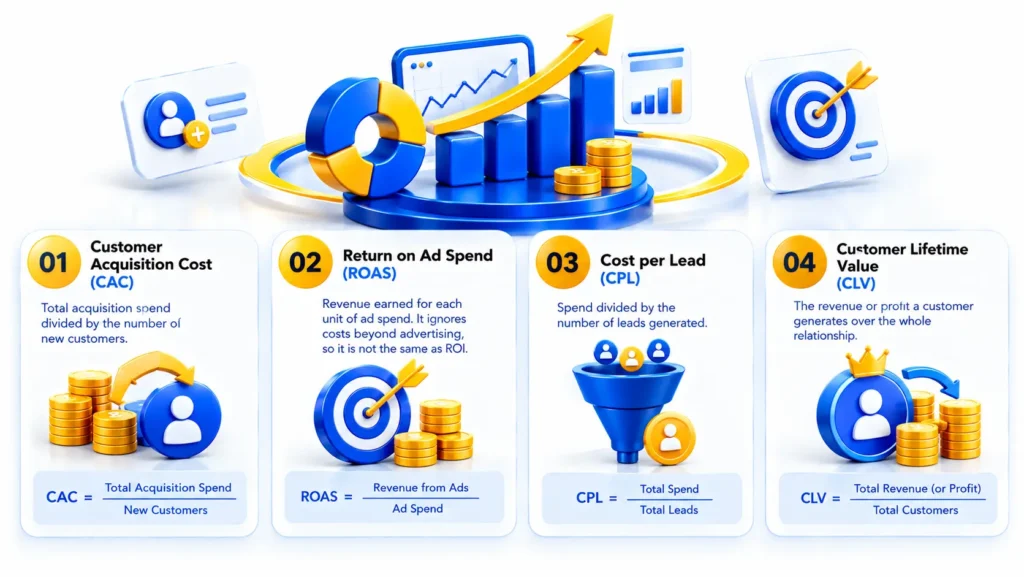
- Customer acquisition cost (CAC): total acquisition spend divided by the number of new customers.
- Return on ad spend (ROAS): revenue earned for each unit of ad spend. It ignores costs beyond advertising, so it is not the same as ROI.
- Cost per lead (CPL): spend divided by the number of leads generated.
- Customer lifetime value (CLV): the revenue or profit a customer generates over the whole relationship.
Why Channel ROI Is Hard to Read
Buyers rarely use one channel. Someone may find a brand through search, follow it on social media, read an email, and convert through a paid ad. Attribution models decide which touchpoint receives credit, and each model produces a different ROI figure. Google Analytics lets you compare last click and data-driven attribution, so review both before you cut a channel.
Which Digital Marketing Channel Gives the Best ROI?
SEO and email marketing most often deliver the strongest long-term return, because they build on earned or owned assets. PPC usually delivers the fastest measurable return. Published benchmarks vary by industry and method, so treat any single percentage with caution and test against your own data.
SEO
SEO earns traffic from search engines without a cost per click. Content, technical health, and authority keep working after publication, so the cost per visit tends to fall over time. The trade-off is patience: results usually take months, and nobody can guarantee positions. SEO suits businesses with existing search demand, such as clinics, education providers, and online stores. Google Search Central documents how crawling, indexing, and search features work.
Local SEO and Google Business Profile
Local SEO targets customers searching for nearby providers. A complete Google Business Profile, consistent business details across directories, location-relevant pages, and genuine reviews support visibility in map results. For clinics, salons, and service businesses, local SEO in Kochi reaches people who are already searching for a nearby provider, which keeps targeting tight.
Email Marketing
Email reaches people who gave permission, and you own the list, so there are no auctions or algorithm shifts. Costs cover software, design, and writing, which is why returns often look strong for stores with repeat buyers. The limit is list size. Email amplifies other channels, since SEO, social media, and ads feed the subscriber base.
PPC Advertising
Pay-per-click platforms such as Google Ads and Microsoft Advertising place your offer in front of people actively searching. Spending stops when traffic stops, but you can test offers fast and see cost per lead within days. PPC ROI depends on landing page quality, bid strategy, and conversion tracking. It also validates demand before you invest in long-term SEO.
Social Media Marketing
Social media marketing covers organic posting and paid campaigns on platforms such as Instagram, Facebook, LinkedIn, and YouTube. It builds awareness and community, and paid social supports precise audience targeting. Direct ROI is harder to prove because many buyers see content long before they purchase. Meta Ads Manager reports conversions, but results improve when website tracking is set up correctly.
Content Marketing
Content marketing feeds SEO, email, and social channels through articles, videos, guides, and tools. Its return is indirect: one article can attract search visitors, grow a newsletter, and answer sales questions for years. Measure it through assisted conversions and qualified leads, not page views alone.
How Business Type Changes the Best Channel
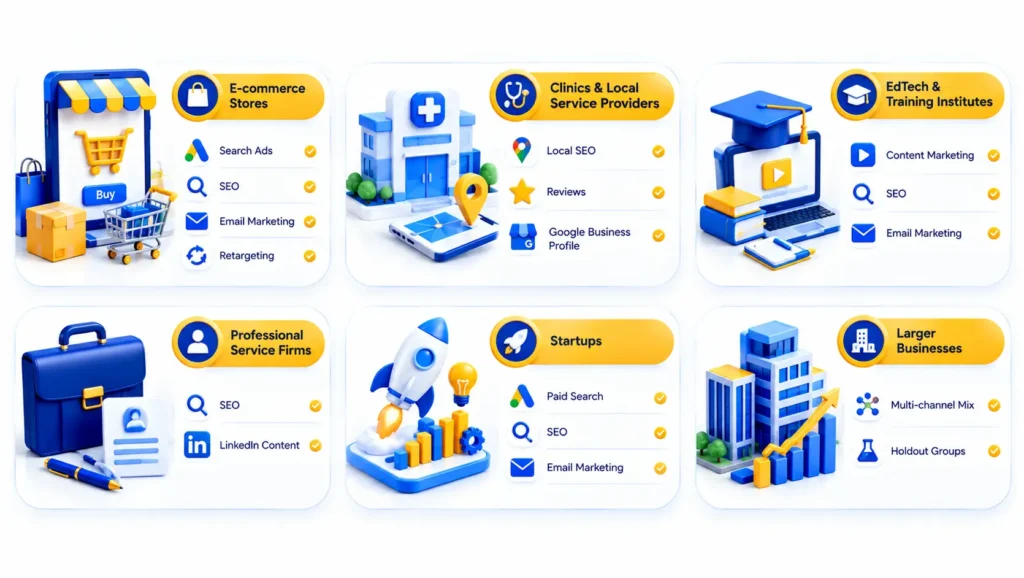
The strongest channel mix follows the way customers buy.
- E-commerce stores: search ads and SEO capture product demand, while email and retargeting drive repeat purchases.
- Clinics and local service providers: local SEO, reviews, and a complete Google Business Profile reach nearby searchers who are ready to book.
- EdTech and training institutes: content marketing and SEO suit long research cycles, and email nurtures enquiries.
- Professional service firms: SEO and LinkedIn content build trust before a first conversation.
- Startups: paid search validates demand quickly, then SEO and email build owned assets.
- Larger businesses: a multichannel mix, tested with holdout groups to measure incremental revenue.
Budget matters too. A channel with a high ceiling but a slow payback period may not suit a business that needs leads this month.
Factors That Change ROI on Any Channel
Channel choice explains only part of the result. These factors often matter more:
- Offer strength: a clear, competitive offer converts better than any targeting tweak.
- Landing page experience: speed, clarity, and mobile usability affect conversion rate.
- Customer lifetime value: repeat purchases raise the return a channel can justify.
- Sales follow-up: leads that wait days for a reply convert less.
- Time horizon: SEO and content compound slowly, while paid channels pay back quickly but stop when budgets stop.
- Audience fit: a channel only performs when your buyers actually use it.
- Tracking quality: missing conversion tags make strong channels look weak.
How to Measure Digital Marketing ROI Step by Step
- Define one measurable goal per channel, such as qualified leads or purchases.
- Set up conversion tracking in Google Analytics and each ad platform.
- Record every cost, including tools, creative work, and management time.
- Attribute revenue or gross profit using a consistent model.
- Compare results over a period that matches the channel’s payback time.
- Shift budget gradually toward the channels that earn the most per unit of spend.
Review the numbers monthly, but judge SEO and content over quarters rather than weeks.
Common Mistakes That Distort Marketing ROI
- Judging every channel on last click conversions, which undervalues search, content, and social media.
- Counting traffic or followers as returns.
- Ignoring costs such as creative production and staff time.
- Cutting a slow channel before its payback period ends.
- Running ads without tested landing pages.
- Comparing channels over different time periods.
Choosing a Marketing Partner for Channel Strategy
Businesses that lack in-house expertise often work with a digital marketing agency in Kochi to plan, run, and measure channels. Useful questions to ask include which channels the agency would recommend and why, how it tracks conversions, what reports you will receive, and how pricing and contract terms work. Providers such as Dotcom Creativez offer SEO, content, and design services, which gives businesses one place to evaluate how channels work together. Look for reporting tied to leads and revenue, not only impressions.
Frequently Asked Questions
Which channel has the highest ROI for small businesses?
Local SEO and email marketing often return the most for small businesses because they rely on owned or earned visibility rather than constant ad spend. Paid search can work earlier if the budget allows.
Is SEO better than PPC for ROI?
Neither is better in every case. SEO costs less per visit over time but takes months. PPC delivers faster, trackable results but stops when spending stops.
How long does it take to see ROI from digital marketing?
Paid channels can show results within days or weeks. SEO and content marketing usually need several months to build momentum.
What is a good ROI for digital marketing?
It depends on margins, industry, and customer lifetime value. A good return exceeds all costs and meets your profit target, not a universal percentage.
Can social media marketing deliver measurable ROI?
Yes, when you track conversions through platform pixels and website analytics. Social often assists sales earlier in the journey, so review assisted conversions as well.
Does local SEO matter for businesses in Kochi?
Yes. Customers searching for nearby services rely on map results, reviews, and Google Business Profile details, so complete and accurate listings support local visibility.
Should I use more than one channel?
Usually yes. Channels reinforce each other: search brings new visitors, email brings them back, and content answers questions along the way.
Choosing a Channel Based on Evidence, Not Trends
The best channel is the one that earns more profit than it costs for your specific business. SEO and email tend to compound over time, PPC delivers speed, and social media and content marketing support the rest of the buying journey. Start with clear tracking, compare channels on profit, and adjust budgets as data builds. Dotcom Creativez works with businesses on SEO, content, and design, and the same principle applies to every project: measure results against real business goals.