
Choosing a social media marketing agency affects your budget, your brand voice, and the quality of the leads you receive. This guide explains how to define your goals, which services to expect, how to judge an agency’s process and reporting, and what pricing and contracts usually involve. It also lists warning signs and practical questions to ask before you sign, so you can compare your options with confidence.
What Does a Social Media Marketing Agency Actually Do?
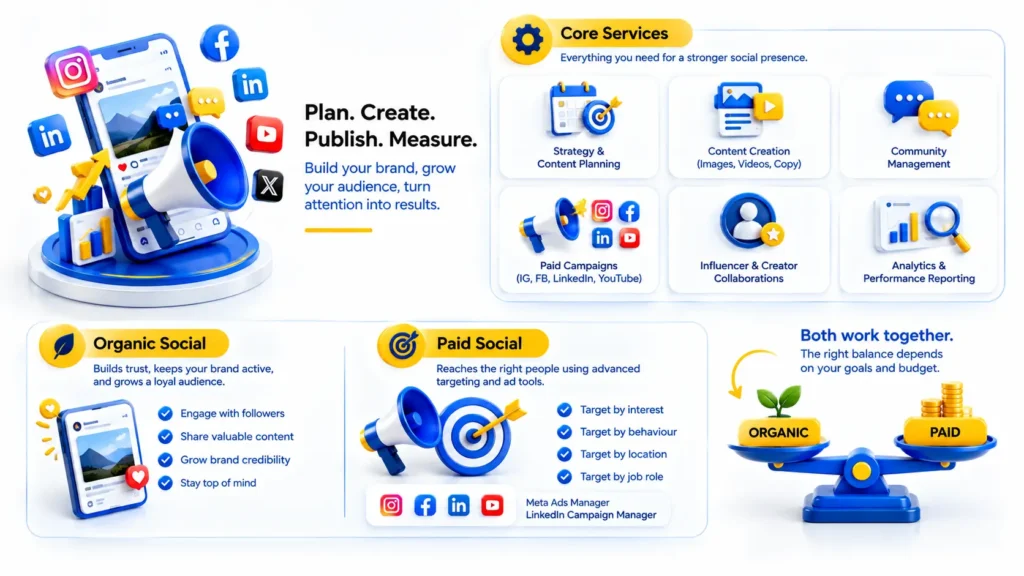
An agency plans, produces, publishes, and measures social media activity on behalf of a business. The aim is to build brand visibility, grow an engaged audience, and turn attention into enquiries or sales.
Core services to expect
Most agencies offer a mix of the following:
- Social media strategy and content planning
- Content creation, including graphics, short videos, and copywriting
- Community management, such as replying to comments and messages
- Paid campaigns on platforms like Instagram, Facebook, LinkedIn, and YouTube
- Influencer and creator collaborations
- Analytics and performance reporting
Organic social versus paid social
Organic social media builds trust and keeps your brand active in front of followers. Paid social uses tools such as Meta Ads Manager or LinkedIn Campaign Manager to reach defined audiences by interest, behaviour, location, and job role. Most businesses need both, but the balance depends on goals and budget. An agency should explain which one to prioritise and why.
Start With Your Business Goals Before You Shortlist Agencies
Agencies can only be judged against a clear target. If you do not know what success looks like, every proposal will sound equally convincing.
Define measurable objectives
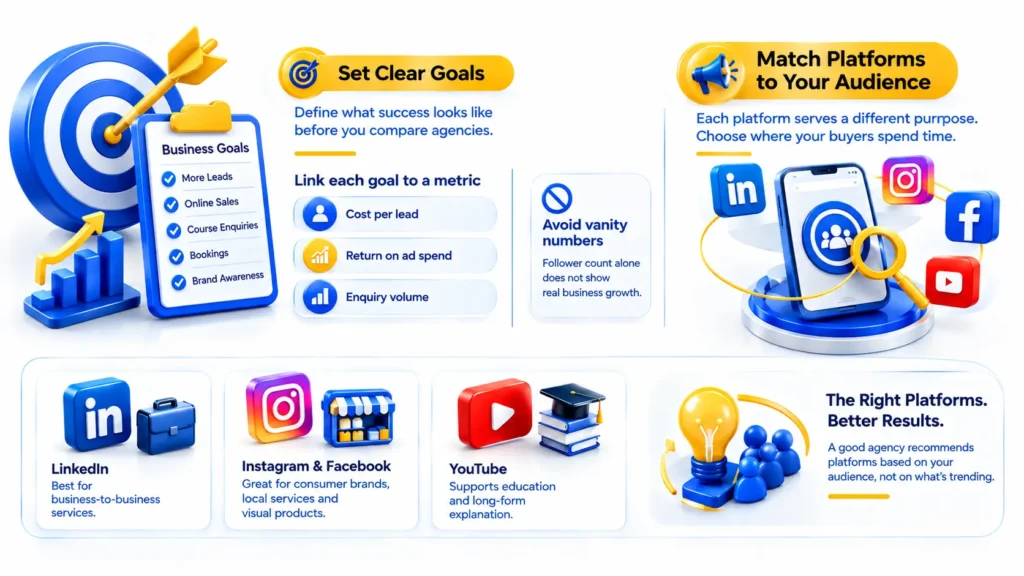
Write down two or three outcomes before you speak to anyone. Common examples include:
- More qualified leads for a service business
- Online sales for an e-commerce store
- Course enquiries for an education company
- Appointment bookings for a clinic
- Higher brand recognition among a defined audience
Tie each objective to a metric, such as cost per lead, return on ad spend, or enquiry volume. Vanity numbers like follower count rarely reflect business growth on their own.
Match platforms to your audience
Each platform serves a different purpose. LinkedIn suits business-to-business services. Instagram and Facebook work well for consumer brands, local services, and visual products. YouTube supports education and long-form explanation. A good agency recommends platforms based on where your buyers spend time, not on what is fashionable.
What to Look For When Evaluating an Agency
Once your goals are clear, assess each agency against the same criteria. This keeps the comparison fair.
Relevant experience and verifiable work
Ask to see campaigns the agency has managed in your industry or a similar one. Healthcare, education, retail, and professional services each have different advertising rules, buying cycles, and audience expectations. Request references you can contact, and read the results in context. A result is more useful when you know the budget, timeline, and goal behind it.
A clear strategic process
A reliable agency begins with research. It should study your audience, competitors, current profiles, and past performance before proposing content. Be cautious of anyone who offers a fixed posting calendar without asking about your customers or sales process.
Creative and content quality
Review the agency’s own social profiles and client pages. Look for consistent branding, clear messaging, and content that suits each platform.
Paid media and tracking skills
If you plan to run ads, confirm that the agency understands audience targeting, budget allocation, creative testing, and conversion tracking. Ask how they set up the Meta Pixel or Conversions API, and how they use UTM parameters with Google Analytics so leads can be traced to specific campaigns. Without proper tracking, you cannot tell which spend produces results.
Reporting and communication
Ask how often you will receive reports and what they contain. Useful reports connect activity to business outcomes, explain what worked and what did not, and recommend next steps. Also ask who your main contact will be, how quickly they respond, and whether you will have regular review calls.
Why Local Presence Can Matter
For many small and medium-sized businesses, working with a nearby team makes collaboration easier. A digital marketing agency in Kochi can visit your premises, understand how local customers behave, and shoot content in the places your audience recognises. This helps most when your customers live in the same area and your offers depend on local culture, festivals, or language preferences.
Local expertise is especially valuable if social media works alongside other channels. Social media marketing in Kochi often supports local search visibility, Google Business Profile activity, and review generation. An agency that connects these channels can give you a more consistent brand presence.
Location should still be only one factor. Evaluate capability first, then convenience. When reviewing providers, read their service pages carefully. Dotcom Creativez, for example, publishes details of its digital marketing services on its website, and that kind of public information gives you a starting point for comparing scope, approach, and specialisation.
Understanding Pricing, Contracts, and Ownership
Cost is important, but the cheapest proposal is rarely the most useful one. Understand what you are paying for.
What affects agency pricing
Pricing usually depends on:
- The number of platforms managed
- Posting frequency and content formats
- Video production requirements
- Community management hours
- Ad management complexity
- Reporting depth
Common models include monthly retainers, project-based fees, and a management fee based on ad spend. Ask whether the ad budget is separate from the agency fee. It normally is, and you should know exactly how much goes to the platform.
Contract terms to read carefully
Check the contract length, notice period, scope of work, and exit terms. Confirm who owns the social accounts, ad accounts, creative files, and audience data. You should retain administrator access to every account the agency uses on your behalf. If the relationship ends, you should be able to take your assets with you.
Warning Signs to Avoid
Some patterns suggest that an agency may not deliver value:
- It guarantees viral content or fixed follower growth. Platform algorithms change, and no one controls them.
- It buys followers or engagement. These add numbers but not customers.
- It refuses to share account access or detailed reports.
- It offers the same package to every client regardless of goals.
- It cannot explain how it measures results.
Questions to Ask Before You Hire
A structured conversation reveals more than a polished presentation. Consider asking:
- How would you describe our audience after your initial research?
- Which metrics will you report, and how do they link to our goals?
- Who creates the content, and who approves it?
- How do you handle negative comments or complaints?
- How do you test ad creatives and audiences?
- What happens if results fall short of expectations?
Pay attention to how specific the answers are. Vague replies often indicate a lack of process.
A Practical Selection Process
Follow these steps to keep the decision organised:
- Set your goals, budget range, and timeline.
- List four or five agencies from searches, referrals, and business directories.
- Review their portfolios, services, and public content.
- Request proposals based on the same brief.
- Hold interviews and ask the same questions to each team.
- Contact references and verify the results shared.
- Consider a short pilot project before signing a long contract.
A pilot lets you assess communication, creative quality, and reporting in real conditions.
Frequently Asked Questions
How much should a business spend on social media marketing?
There is no standard figure. Spending depends on your goals, industry competition, and platforms. Many businesses start with a modest ad budget, test performance, and increase investment as the data shows what works. Always budget separately for agency fees and advertising spend.
Should I hire an agency or an in-house social media manager?
An in-house manager gives you daily control and brand familiarity. An agency provides a wider skill set, including strategy, design, video, paid media, and analytics, without hiring several people. Smaller businesses often prefer an agency for that reason.
How long does it take to see results?
Paid campaigns can produce early signals within a few weeks, though optimisation takes longer. Organic growth is slower and builds through consistent publishing and engagement. Expect a few months before judging overall performance.
What should a social media report include?
A good report shows reach, engagement, clicks, leads, conversions, cost per result, and audience insights. It should compare performance against your goals and explain the next steps.
Is a local agency better than an out-of-town provider?
Not automatically. A local team offers easier meetings and stronger market knowledge, while a remote team may offer a specific specialisation. Evaluate skills, process, and results before location.
What is the difference between a social media agency and a full-service digital marketing agency?
A social media agency focuses on platforms and community. A full-service agency also covers search engine optimization, Google Ads, web development, and content marketing, which helps when you want channels to work together.
Making the Final Decision
The right partner understands your goals, explains its process in plain language, tracks results accurately, and treats your accounts and data with transparency. Compare agencies on strategy, relevant experience, reporting, pricing clarity, and contract terms, then test the relationship with a small project where possible. When you review providers, including Dotcom Creativez, look for evidence of a clear method and honest communication, because those qualities matter more than promises.

The Dotcom Creativez team is a digital marketing team based in Kerala, helping businesses improve their online visibility and reach their target audiences. With over seven years of industry experience within its leadership, the agency provides services including SEO, performance marketing, social media marketing, content marketing, and web development. The team creates strategies based on business goals, audience needs, and market research, with a focus on generating qualified leads, increasing conversions, and supporting measurable business growth.