
A social media marketing strategy is the connective plan that turns scattered posting into a system for measurable results. Social media marketing itself means using platforms like Instagram, LinkedIn, and TikTok to build relationships with an audience and guide them toward a business goal. This guide walks through building that strategy step by step, from setting goals to tracking the right KPIs.
What Is a Social Media Marketing Strategy
A SMM strategy is a documented plan that defines who a business is trying to reach, what it wants those people to do, and which platforms and content types will drive that outcome. It differs from random posting because every piece of content ties back to a business objective, not just visibility.
Why Businesses Need One Right Now
Algorithms across every major platform now favor accounts that post with purpose and consistency over accounts that post often but without direction. A clear strategy tells a business what to publish, who it’s for, when to publish it, and why that content supports growth. Startups need this early, established brands need it to stay relevant, and healthcare or edtech providers need it to build trust before a sale ever happens.
Setting Social Media Marketing Goals and Objectives
Aligning Goals With Business Outcomes
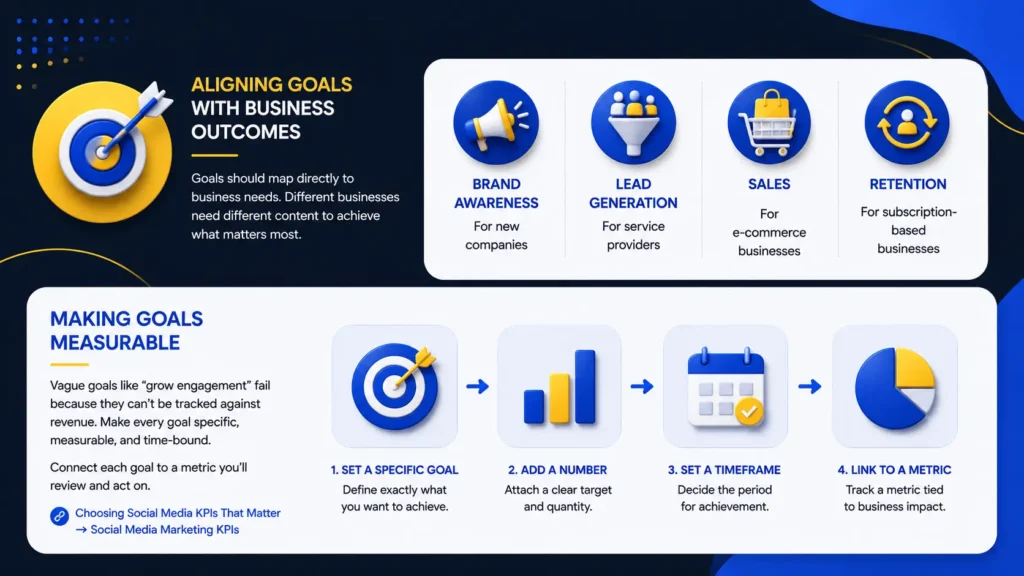
Goals should map directly to business needs: brand awareness for new companies, lead generation for service providers, sales for e-commerce, and retention for subscription-based businesses. A clinic chasing awareness needs different content than an online store chasing checkout conversions.
Making Goals Measurable
Vague goals like “grow engagement” fail because they can’t be tracked against revenue. Attach a number and a timeframe to every goal, and connect it to a specific metric that will be reviewed later in choosing social media KPIs that matter
How to Identify Your Target Audience on Social Media
Building an Audience Persona
An audience persona captures age range, profession, pain points, and buying triggers for the exact people a business wants to reach, not a generic demographic slice.
Find the Right Audience. Stop Wasting Ad Budget.
Researching Where Your Audience Spends Time
Platform analytics, competitor followers, and customer surveys reveal where an audience actually scrolls. A B2B software company might find its buyers active on LinkedIn during work hours, while a skincare brand finds its buyers on Instagram in the evening.
How to Choose the Right Social Media Platforms
Matching Platforms to Business Type and Audience
Not every platform deserves equal attention. LinkedIn suits professional services and B2B sales cycles, Instagram and TikTok suit visual, consumer-facing brands, and Facebook still works for local and community-driven businesses. Spreading effort thin across five platforms usually produces weaker results than mastering two.
Building a Social Media Content Strategy
Content Pillars and Formats
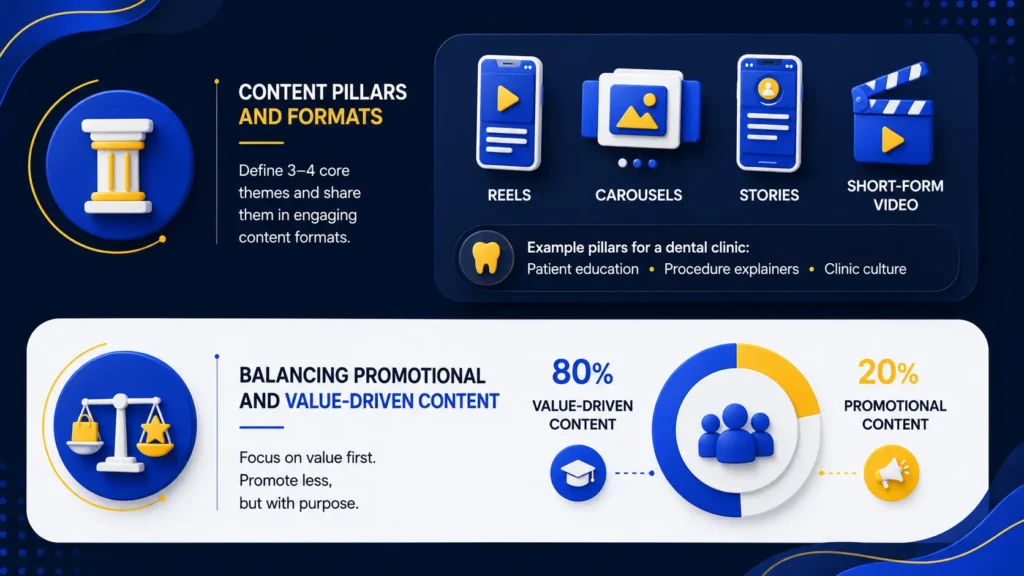
Content pillars are the three or four recurring themes a brand consistently posts about, expressed through formats like Reels, carousels, Stories, and short-form video. A dental clinic might build pillars around patient education, procedure explainers, and clinic culture.
Balancing Promotional and Value-Driven Content
Audiences disengage from feeds that only sell. A working ratio leans heavily toward educational or entertaining content, with promotional posts appearing sparingly and purposefully.
Creating a Social Media Posting Strategy
Frequency, Timing, and Consistency
Posting frequency should match what a team can sustain without dropping quality. Consistent, moderate posting outperforms sporadic bursts followed by silence, because the algorithm rewards reliability.
Using a Content Calendar
A social media content calendar template keeps publishing organized across platforms, prevents last-minute scrambling, and lets a team plan around product launches or seasonal demand.
Understanding the Social Media Marketing Funnel
Awareness, Consideration, Decision, Loyalty
The funnel moves a stranger through four stages: awareness content introduces the brand, consideration content builds trust through education, decision content pushes toward action with offers or testimonials, and loyalty content keeps existing customers engaged after purchase.
How to Create a Social Media Marketing Strategy, Step by Step
- Define one primary business goal and a supporting metric
- Build a specific audience persona based on real customer data
- Select two or three platforms where that persona is active
- Set content pillars tied to the funnel stage you’re targeting
- Draft a realistic posting schedule your team can maintain
- Build a content calendar covering at least four weeks ahead
- Publish, monitor engagement, and adjust based on what performs
- Review KPIs monthly and refine the plan accordingly
Building a Social Media Marketing Plan
Turning Strategy Into an Executable Plan
A plan breaks the strategy into weekly tasks: who creates each asset, who approves it, and who publishes it. Agencies such as Dotcom Creativez typically structure this into a shared calendar so clients can see exactly what’s going live and why.
Tracking Social Media Marketing KPIs
Key Metrics to Monitor
Engagement rate shows content resonance, reach and impressions show visibility, click-through rate shows funnel movement, and conversion rate shows whether social effort translates into revenue. Vanity metrics like follower count matter far less than these.
Social Media Marketing Strategy for Small Businesses
Low-Budget, High-Impact Tactics
Small businesses can compete without large budgets by leaning on community management, user-generated content, and consistent short-form video instead of paid campaigns. A single well-timed Reel can outperform a poorly targeted ad. Many small business owners searching for the best digital marketing agency in Kerala are specifically looking for this kind of lean, results-first approach.
B2B vs B2C Social Media Marketing Strategy
How B2B Strategy Differs
B2B strategy centers on LinkedIn, thought leadership, and longer sales cycles where trust builds over several touchpoints before a lead converts.
How B2C Strategy Differs
B2C strategy leans on visual platforms, emotional storytelling, and shorter paths from discovery to purchase, often within a single scroll session.
Common Mistakes to Avoid
- Posting without a defined goal or audience
- Copying competitor content instead of building original pillars
- Ignoring analytics after publishing
- Treating every platform the same way
- Abandoning a strategy before three months of consistent effort
Conclusion
A social media marketing strategy works when it’s treated as a living system, not a one-time document. It needs clear goals, a defined audience, the right platforms, and honest review of what the data shows each month. Businesses that want this built and managed by specialists, including firms searching for the best digital marketing agency in Thrissur, often bring in a partner like Dotcom Creativez to handle strategy, content, and reporting so the internal team can focus on running the business.
Know about social media marketing for business growth
FAQ
How often should a business post on social media?
There’s no universal number, but consistency matters more than volume. Two to four well-planned posts per week on the right platform usually outperform daily posts with no clear purpose.
What is the difference between a social media strategy and a social media plan?
A strategy defines the goals, audience, and platforms a business will focus on. A plan translates that strategy into a scheduled, actionable calendar of tasks and content.
Which social media platform is best for a small business?
It depends on where the target audience spends time. Local service businesses often do well on Facebook and Instagram, while B2B small businesses see stronger results on LinkedIn.
How long does it take to see results from a social media strategy?
Meaningful engagement trends usually appear within six to eight weeks, while measurable business outcomes like leads or sales often take three to six months of consistent execution.
Do businesses need to be on every social media platform?
No. Being active on two or three platforms where the audience genuinely engages performs better than a thin presence spread across every network.
Can a small business run social media marketing without an agency?
Yes, with enough internal time and consistency, though many businesses find that partnering with an experienced agency accelerates results and frees up internal resources.