
AI search tools now answer trip questions directly, often before a traveler opens a single website. Google AI Overviews, AI Mode, and chat assistants summarize destinations, compare hotels, and suggest itineraries on the results page. This guide explains how that shift changes travel website traffic and bookings, which parts of the travel funnel feel the most pressure, and what tourism businesses, hotels, tour operators, and booking platforms can do to stay visible and keep converting visitors.
How Does AI Search Change the Way People Plan Trips?
AI search generates a written answer instead of a plain list of links. A traveler can ask for a five day itinerary, a family friendly beach resort, or the best season for a trekking holiday, and receive a summary built from many sources.
Travel research is a good fit for this format because trips involve many linked decisions: destination, dates, budget, transport, stays, and activities. Earlier, a traveler opened a dozen tabs to answer these. Now one conversational response can cover most of them.
Where AI Answers Appear
Google shows AI Overviews at the top of many search results, and AI Mode offers a conversational search experience. Separate assistants such as ChatGPT, Gemini, Perplexity, and Microsoft Copilot answer travel questions inside their own interfaces. Each one pulls from web pages, reviews, maps data, and structured listings.
Which Travel Queries Are Most Affected?
Informational queries feel the change first. Questions such as what to see, how many days to spend, or when to travel are easy for AI to summarize. Navigational and transactional queries, such as a specific hotel name or a flight search, still send more users to booking pages.
How Is AI Search Affecting Travel Website Traffic?
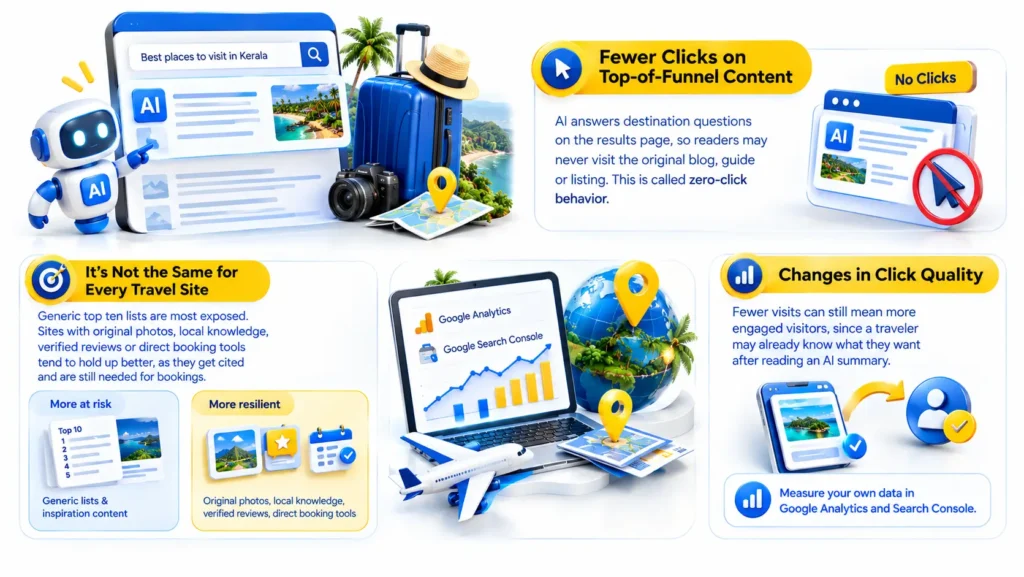
The main effect is fewer clicks on top-of-funnel content. When an AI summary answers a destination question on the results page, the reader may never visit the blog post, guide, or listing that supplied the information. Publishers often call this zero-click behavior.
The effect is uneven. Sites that depend on broad inspiration content, such as generic top ten lists, are most exposed. Sites with original photography, local knowledge, verified reviews, or direct booking tools tend to hold up better, because AI systems often cite them and travelers still need them to complete a purchase.
Changes in Click Quality
Fewer visits can still mean more engaged visitors, since a traveler who clicks after reading an AI summary may already know what they want. No single figure applies to every site, so travel businesses should measure their own data in Google Analytics and Google Search Console rather than rely on general averages.
Referral Traffic From AI Assistants
AI assistants can also send visitors. Some cite sources with links, and these referrals appear in analytics as a separate traffic source. Volumes can be small compared with traditional search, but they are worth tracking because the behavior is still developing.
How Do AI Search Changes Affect Travel Bookings?
Bookings depend on trust, price clarity, and ease of purchase. AI search influences the first two before a traveler reaches your site, and it can shorten or reshape the path to the third.
A Shorter, Less Visible Research Phase
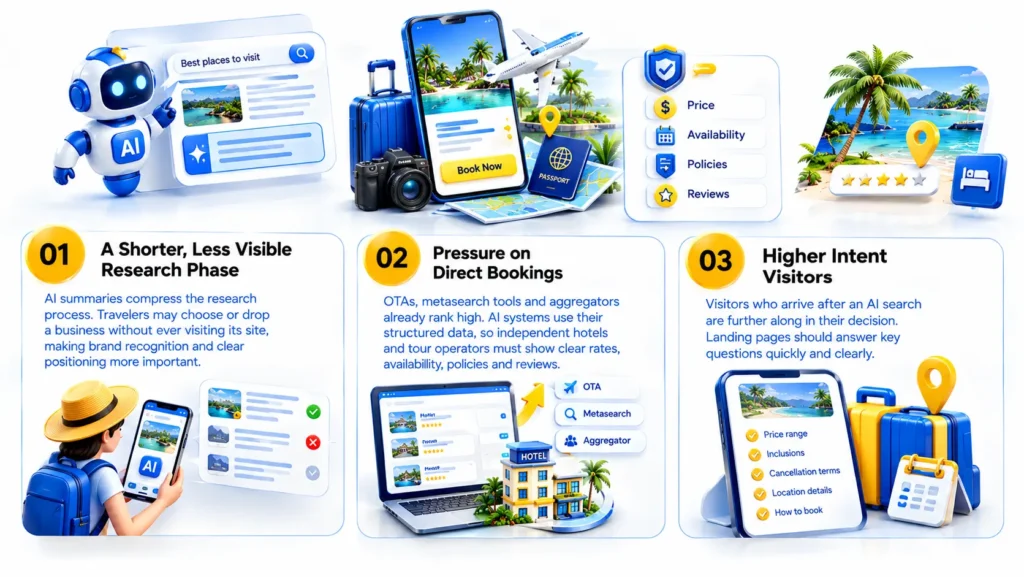
Travelers used to compare several sites over days or weeks. AI summaries compress that research. A business may therefore be shortlisted or dropped without ever appearing in its own analytics, which makes brand recognition and clear positioning more valuable.
Pressure on Direct Bookings
Online travel agencies, metasearch tools, and aggregator platforms already hold strong positions in search. AI systems can draw on these structured sources, which tend to be consistent and widely reviewed. Independent hotels and tour operators must therefore work harder to present clear rates, availability, policies, and reviews on their own sites.
Higher Intent Visitors
Visitors who arrive after an AI-assisted search may be further along in their decision. Landing pages should answer practical questions quickly: price range, inclusions, cancellation terms, location details, and how to book.
What Can Travel Businesses Do to Stay Visible in AI Search?
Google’s Search Central documentation indicates that AI features rely on core Search systems, so established SEO practices still apply. No special technical markup is required to appear in AI Overviews or AI Mode.
Publish Original, Experience-Based Content
Generic destination summaries are easy for AI to replace. Content built on first-hand details is harder to replicate: route timings, seasonal conditions, property features, accessibility information, and honest pros and cons. Credit authors, show expertise, and keep pages updated.
Strengthen Technical Foundations
AI systems can only use what they can crawl and interpret. Make sure important pages are indexable, load quickly on mobile, and use clear heading structures. Add structured data that matches visible content, such as Hotel, Product, Review, and Event markup where appropriate.
Keep Business Listings Accurate
Travel decisions rely on location data. Maintain a complete Google Business Profile with correct hours, photos, amenities, and booking links, and respond to reviews consistently. Align names, addresses, and descriptions across directories and travel platforms so systems can match the business as one entity.
Write Content That Answers Questions Directly
Lead each section with a concise answer, then add supporting detail. Use question-based headings for common queries about costs, timing, and logistics. Clear definitions and short summaries make pages easier for both readers and answer engines to quote.
Build Brand Demand and Reviews
AI summaries can favor entities that are widely mentioned and well reviewed. Encourage genuine guest reviews, earn coverage from tourism publications, and keep social media active. Travelers who search for a brand by name bypass much of the competition inside AI answers.
Common Mistakes to Avoid
- Publishing mass-produced destination pages with little original value.
- Blocking crawlers from important pages by mistake.
- Hiding prices, policies, or availability behind forms.
- Ignoring reviews and negative feedback.
- Judging success only by clicks, without tracking bookings and enquiries.
How Can Travel Businesses Measure the Impact?
Measurement should separate genuine decline from normal seasonality. Travel demand rises and falls through the year, so compare periods year over year, not month over month.
- Google Search Console: track impressions, clicks, and click-through rate by page and query.
- Google Analytics: review landing page engagement, conversion paths, and referral sources from AI assistants.
- Booking data: compare direct bookings against platform bookings and enquiry volume.
- Brand search: watch branded query growth, which can signal rising awareness.
- Manual checks: ask common travel questions in AI tools and note which sources are cited.
What Role Does an SEO Partner Play?
A digital marketing agency in Trivandrum can help travel businesses connect technical SEO, content strategy, analytics, and reputation work, which together shape AI search visibility. Dotcom Creativez, for example, works across SEO, content, conversion optimization, and website design, the areas this shift touches most. The business still supplies first-hand destination knowledge and accurate service details.
When evaluating any agency, ask about its reporting process, experience with travel or hospitality content, approach to Google Business Profile management, and how it avoids unsupported ranking promises. Nobody can guarantee placement in AI answers.
Common Questions About AI Search and Travel Websites
Does AI search reduce traffic to travel websites?
It can reduce clicks on informational pages, since users receive answers on the results page. Impact varies by site type, content quality, and query mix, so each business should check its own Search Console and analytics data.
Can a travel website appear in Google AI Overviews?
Yes. Pages that are indexed, eligible to appear in Search with a snippet, and genuinely helpful can be used. Google documents that no special optimization is required beyond sound SEO practices.
Do AI assistants book trips for travelers?
Some platforms are testing booking features through partnerships with travel companies, but most assistants still hand users over to a booking site to complete the purchase. Check current capabilities, since they change quickly.
Is a Google Business Profile still useful for travel businesses?
Yes. It supplies verified details such as location, hours, photos, reviews, and booking links, which feed maps results and can support how a business is understood across search.
What content works best for AI search in travel?
Original, specific, and current content tends to be most useful: first-hand guides, transparent pricing information, clear policies, and well-organized answers to practical questions. Thin listicles and copied descriptions offer little reason for a system to cite them.
Does local SEO in Trivandrum still matter for tourism businesses?
Yes. Travelers often search for nearby stays, tours, and services, and local results draw on maps data, reviews, and listing accuracy. Strong local SEO in Trivandrum helps tourism businesses stay visible when those searches turn into AI-assisted recommendations.
What Should Travel Businesses Do Next?
AI search is reshaping how travelers research, compare, and choose, and the most visible effect is on informational clicks rather than on the demand for travel itself. Visibility now depends on being useful enough to be cited and trusted enough to be chosen.
Focus on original content, accurate listings, strong technical foundations, and careful measurement of both traffic and bookings. Dotcom Creativez can be a useful partner for teams that want help turning those priorities into a practical plan, but the strongest asset remains genuine knowledge of the destinations and services you offer.

The Dotcom Creativez team is a digital marketing team based in Kerala, helping businesses improve their online visibility and reach their target audiences. With over seven years of industry experience within its leadership, the agency provides services including SEO, performance marketing, social media marketing, content marketing, and web development. The team creates strategies based on business goals, audience needs, and market research, with a focus on generating qualified leads, increasing conversions, and supporting measurable business growth.