
The 2027 marketing funnel looks less like a straight line from a search click to a purchase. Many buyers research inside AI answers, forums, creator videos, and social feeds before they ever visit a website. This guide explains the five stages of the modern funnel, the shifts that change how teams plan, which assets and channels fit each stage, how to track results with first-party data, and how to run the work in focused 90-day cycles.
What Is the 2027 Marketing Funnel?
The classic funnel assumed a buyer who searched, clicked, read a blog post, and converted on the same website. Today’s buyer moves across AI assistants, video platforms, communities, and review sites, and many of those steps leave no trace in your analytics.
The newer model has five stages: awareness through multi-platform discovery, consideration through trust, capture through owned channels, conversion through tailored offers and speed, and retention through advocacy. Each stage needs its own assets and its own measures.
Evidence suggests the shift in search behavior. A Pew Research Center analysis of browsing data from 900 adults found that people clicked a traditional result in 8% of visits when an AI summary appeared and 15% when none did. Google has disputed the study’s methodology, so treat it as one data point, not a verdict.
How Should You Handle Awareness in AI and Multi-Platform Discovery?
Awareness now means being findable wherever buyers ask questions. That includes AI answers, YouTube, forums, and social feeds, as well as classic search results.
What GEO Means in Practice
Generative engine optimization (GEO) describes making content easy for AI systems to find, understand, and cite. Google’s guidance says AI features need no special optimization and that standard SEO practices still apply, so treat GEO as strong SEO plus clear answers and a recognizable brand. Read Google’s AI features guidance for the official position.
Where to Show Up
- AI answers: publish clear, sourced explanations of the questions your buyers ask.
- YouTube: demonstrate products, explain processes, and answer comparison questions on video.
- Forums and communities: contribute useful answers without promotional spam.
- Social feeds: share short, specific content that shows expertise and personality.
Measure awareness by branded search growth, direct visits, mentions, and assisted conversions rather than clicks alone. Our guide to creating content for Google AI Overviews and AI search covers the content side in detail.
How Do You Build Trust During Consideration?
Consideration is where buyers compare options and look for proof. Experience-led content carries more weight here than generic summaries, because it shows that you have solved the problem before.
Assets that build credibility:
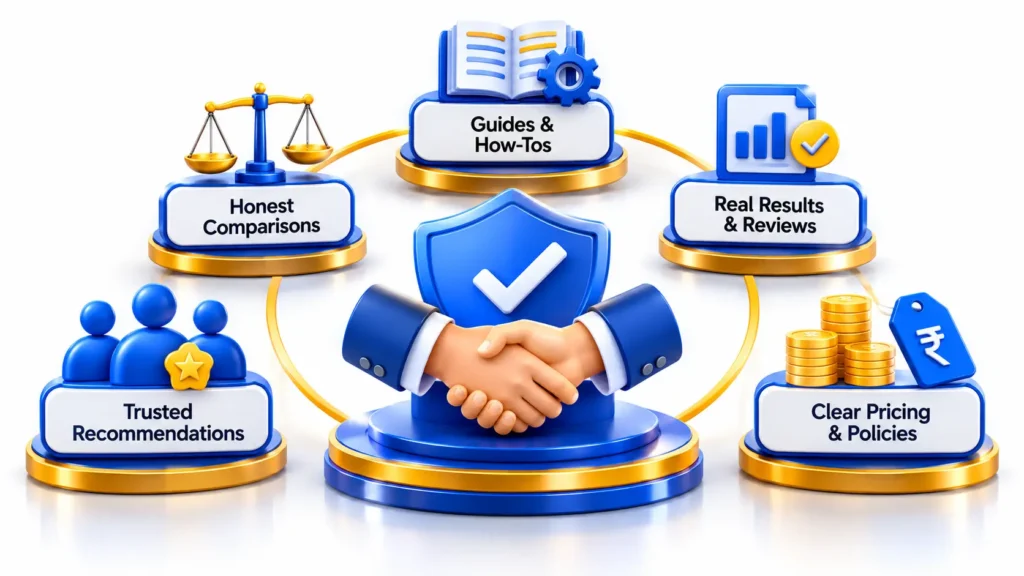
- Problem-solving guides that walk through a task step by step.
- Honest comparison pages that explain who each option suits.
- Documented results, case studies, and customer reviews you can verify.
- Recommendations from niche creators whose audience matches yours.
- Clear pricing explanations, process details, and policies.
Creator partnerships work when the fit is real and the relationship is disclosed. Choose creators whose followers already trust them on your topic, and agree on clear disclosure and measurement.
Why Capture Leads in Owned Channels?
Search and social platforms control reach, rules, and pricing. An email list, SMS permission, WhatsApp opt-in, or private community belongs to you, so it keeps working when platform algorithms change.
Lead Magnets That Earn Contact Details
A lead magnet must solve a specific problem quickly. Templates, calculators, checklists, benchmark reports, short courses, and live sessions often work better than generic newsletters because the value is clear before someone subscribes.
Consent and Data Care
Ask permission, explain how you will use the information, and honor opt-outs. WhatsApp business messaging requires customer opt-in, and Meta’s lead ads let advertisers share CRM data about leads back to the platform to improve lead quality.
How Do You Convert Qualified Leads Faster?
Conversion in the new funnel depends on relevance and speed. A lead who receives a tailored answer quickly is more likely to continue than one who waits for a generic reply.
- Segment leads by interest, behavior, and stage before choosing an offer.
- Send an automated, personal-sounding confirmation within minutes.
- Route high-intent leads to a person quickly for a call or message.
- Match the offer to the need, such as a demo, quote, trial, or consultation.
- Use reminders and retargeting for leads who go quiet.
Automation supports speed but cannot replace judgment. See our guide to AI marketing automation for lead generation for workflows, and our article on why leads do not turn into sales if follow-up is the weak point.
How Do Retention and Advocacy Expand the Funnel?
Retention lowers the cost of growth because existing customers buy again, refer others, and upgrade without a new acquisition cost. Start the relationship well with onboarding that helps customers succeed quickly.
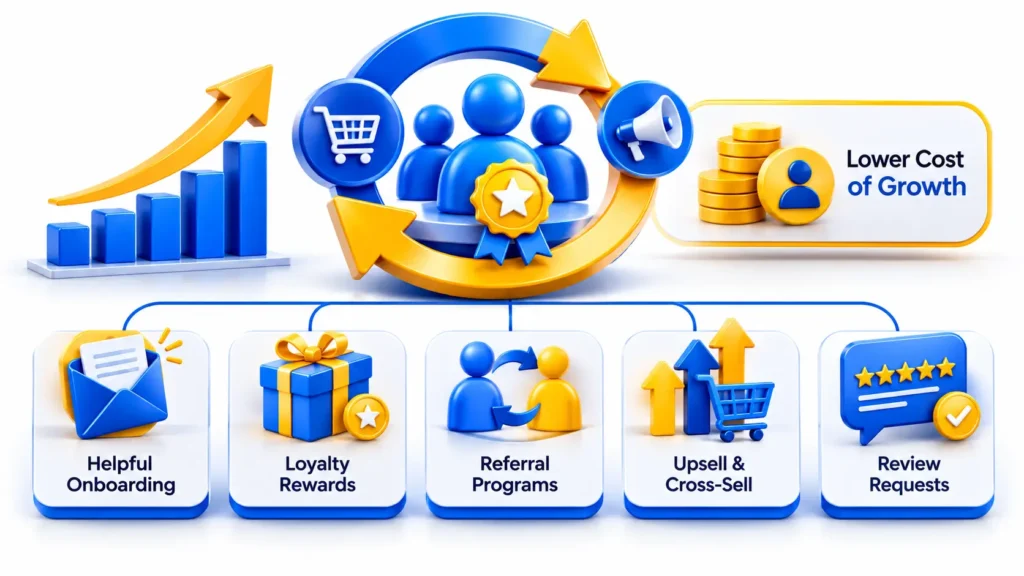
- Onboarding emails or messages that show the first useful result.
- Loyalty loops, such as points, early access, or member pricing.
- Referral programs that reward both the customer and the friend.
- Upsell and cross-sell offers timed to real usage.
- Review requests after a positive experience.
Satisfied customers also feed the consideration stage, because their reviews and recommendations become the proof new buyers seek. The funnel works as a loop, not a one-way line.
Which Shifts Should Change Your Plan?
Less Reliance on Top-of-Funnel Blog Clicks
When AI answers reduce clicks, informational posts alone drive less traffic. Invest more in high-intent pages, original research, tools, and comparison content that people actively seek out and cite.
Creative Diversity Over Small Tweaks
Paid social tends to reward distinct formats. Test founder stories, product demos, comparisons, testimonials, and user-generated content instead of ten minor variations of one ad. Our comparison of organic and paid social media for leads explains how the two channels support each other.
Tighter Tracking and Shorter Cycles
Browser privacy settings and consent rules fragment third-party tracking, so teams rely more on first-party data and CRM records. Mark leads, calls, and sales as key events in Google Analytics 4, and connect them to revenue.
Plan in 90-day sprints: pick one goal, run a small set of tests, review results against revenue, and decide what to scale, fix, or stop. Short cycles prevent long projects from drifting away from real outcomes.
How Do You Measure the Funnel End to End?
Track one or two measures per stage:
- Awareness: branded search, direct traffic, mentions, and video views from target audiences.
- Consideration: engaged visits, comparison page views, and reviews gathered.
- Capture: new subscribers, opt-ins, and cost per qualified contact.
- Conversion: response time, lead-to-customer rate, and revenue by source.
- Retention: repeat purchase rate, referral volume, and customer lifetime value.
Add a short self-reported question, such as how a customer first heard about you, because AI and community discovery often leaves no click trail. Compare the answers with analytics to see where influence hides. For formulas, see our guide to calculating performance marketing ROI, ROAS and customer acquisition cost.
What Should Local Businesses in Trivandrum Do?
Local buyers still compare options through maps, reviews, and word of mouth, so local trust signals matter at every stage. Keep Google Business Profile accurate, collect genuine reviews, and publish location-aware service pages that answer common questions.
A digital marketing agency in Trivandrum can help connect local search, short-form video, WhatsApp capture, and CRM follow-up into one measurable funnel. Dotcom Creativez is one of the providers a business can assess on those points, alongside reporting quality and clarity about what can and cannot be promised.
Frequently Asked Questions About the New Funnel
Is the traditional marketing funnel dead?
No. Buyers still move from awareness to decision, but the path is less linear and less visible. The stages remain useful when you treat them as a loop and measure them with first-party data.
What is generative engine optimization?
It is the practice of making content clear, credible, and easy for AI systems to cite. Google says AI features need no special optimization, so the work overlaps heavily with SEO and brand building.
Should small businesses build an email list or SMS list first?
Choose the channel your customers already use and accept messages on. Email suits most businesses, while SMS and WhatsApp suit fast, local, or service-driven decisions. Always obtain consent.
How do you track leads that start in AI answers or communities?
Use UTM links where possible, add a self-reported source question to forms, and record lead source in your CRM. Watch branded search and direct traffic as indirect signals.
Why use 90-day cycles for marketing plans?
A quarter is long enough to test, learn, and see revenue effects, but short enough to change course. Each cycle should have one goal, a few tests, and a clear review.
How can businesses in Trivandrum start applying this funnel?
Begin with accurate local listings, a lead magnet tied to a real customer question, a fast response process, and a CRM that records sources. Add short-form video and review collection as capacity allows.
Building the Funnel You Can Measure
The 2027 marketing funnel rewards brands that are easy to find across AI answers, video, and communities, trusted enough to compare, and organized to capture, convert, and retain customers through owned channels. Track first-party data, test creative variety, and work in short cycles tied to revenue. Businesses that want help building this system can consider providers such as Dotcom Creativez, then choose one that makes no guarantees about results.

The Dotcom Creativez team is a digital marketing team based in Kerala, helping businesses improve their online visibility and reach their target audiences. With over seven years of industry experience within its leadership, the agency provides services including SEO, performance marketing, social media marketing, content marketing, and web development. The team creates strategies based on business goals, audience needs, and market research, with a focus on generating qualified leads, increasing conversions, and supporting measurable business growth.