
Random posting keeps an account active, but it rarely brings in customers. A social media marketing strategy gives every post a purpose, an audience and a measurable result. This guide explains how a strategy differs from a posting habit, what the plan should contain, how to build one step by step and which mistakes to avoid. It also covers what local businesses in Kochi should consider and answers common questions from owners and marketers.
What Is a Social Media Marketing Strategy?
It is a documented plan that defines which platforms you will use, who you want to reach, what content you will publish and how you will measure results.
Random posting has none of that structure. Content depends on mood, spare time or whatever feels urgent that week. A strategy replaces those guesses with decisions made in advance.
Strategy vs Random Posting
The gap shows up in four areas:
- Goals: a strategy links each post to a business objective, while random posts chase likes
- Audience: a strategy names the customer it serves, while random posts speak to everyone and reach no one
- Consistency: a strategy sets themes and a schedule, while random posts appear in bursts and then go quiet
- Measurement: a strategy defines success before publishing, while random posts leave you guessing
None of this makes spontaneous posts wrong. Timely replies, reactions to news and behind-the-scenes updates all have a place. They work best inside a framework, where they support the goals instead of replacing them.
Why Random Posts Rarely Work
Most businesses start with random posts because they are easy. The problems appear later.
No Clear Goal Means No Proof of Results
Without goals, you cannot judge whether social media supports sales, enquiries or brand awareness. Hootsuite’s strategy guide makes the same point: goals give you the measuring stick for success and return on investment.
Inconsistent Messaging Weakens Recognition
When every post changes tone, design and subject, followers struggle to understand what the brand stands for. People remember brands that repeat a clear message in a recognisable style.
Time and Budget Go to the Wrong Places
Teams that post without a plan often spend hours on content that no one needs and boost posts without a defined audience. A plan shows where effort and ad spend should go.
Customer Conversations Go Unanswered
Community management and social customer care sit at the core of a social media marketing programme, according to Adobe’s campaign guide. Random posting treats social media as a noticeboard, so questions and comments often wait days for a reply.
What a Strong Strategy Includes
Each element below answers one question: why, who, where, what, when or how well.
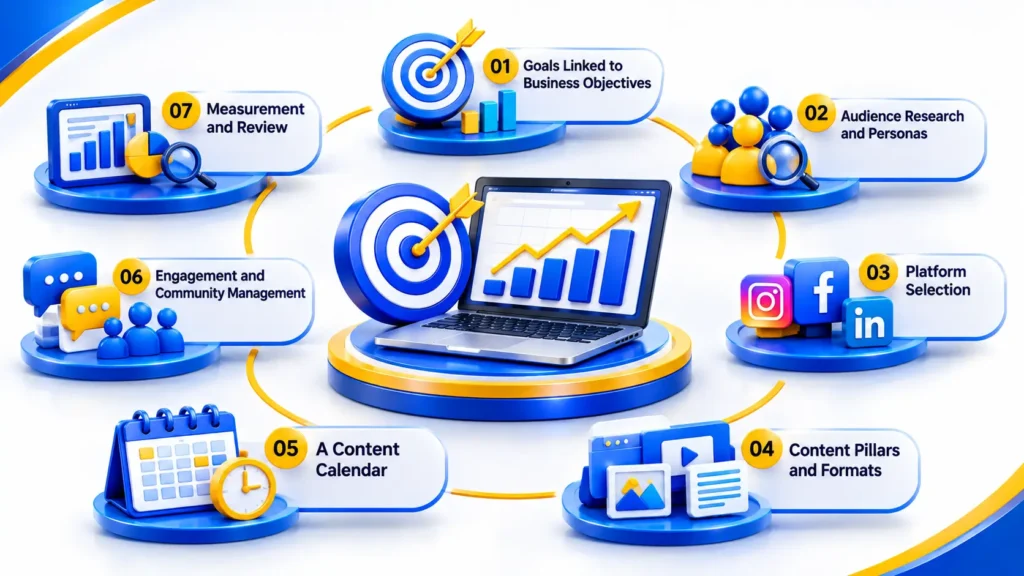
Goals Linked to Business Objectives
Start with SMART goals: specific, measurable, achievable, relevant and time-bound. The American Marketing Association’s strategy guide advises beginning with one to three core goals, because tracking too many metrics at once dilutes focus. Examples include website enquiries, appointment bookings or store visits.
Audience Research and Personas
Audience research tells you who buys, what they ask and which platforms they use. Build simple personas from demographics, buying motivations and common objections. A persona for a clinic patient will lead to different content than a persona for a student comparing courses.
Platform Selection
No business needs every platform. Choose the channels where your customers already spend time and where your team can publish consistently. Instagram and Facebook suit many consumer-facing businesses, while LinkedIn often fits professional services and business-to-business companies. Check each platform’s own insights after a few weeks to confirm the choice.
Content Pillars and Formats
Content pillars are the three to five themes your account returns to, such as education, product proof, customer questions and behind-the-scenes work. Pair each pillar with formats that fit the platform, including short video, carousels and Stories.
A Content Calendar
A calendar records what goes out and when. Coursera’s content calendar advice suggests logging each post’s date, time, visuals, captions and hashtags. The calendar also stops last-minute posting and makes campaigns easier to plan around offers and events.
Engagement and Community Management
Set response times for comments and messages, and decide who answers them. Engagement also shows which topics your audience values, which feeds back into the next month’s plan.
Measurement and Review
Track metrics that connect to your goals. Likes are easy to count but hard to link to revenue, so pair them with enquiries, link clicks and conversions. Meta Business Suite lets you schedule posts for Facebook and Instagram and review reach, engagement and follower growth in one place. Review the same metrics every month, so changes reflect real trends instead of one unusual week.
How to Build a Social Media Strategy in Seven Steps
Follow this sequence to move from random posts to a working plan:
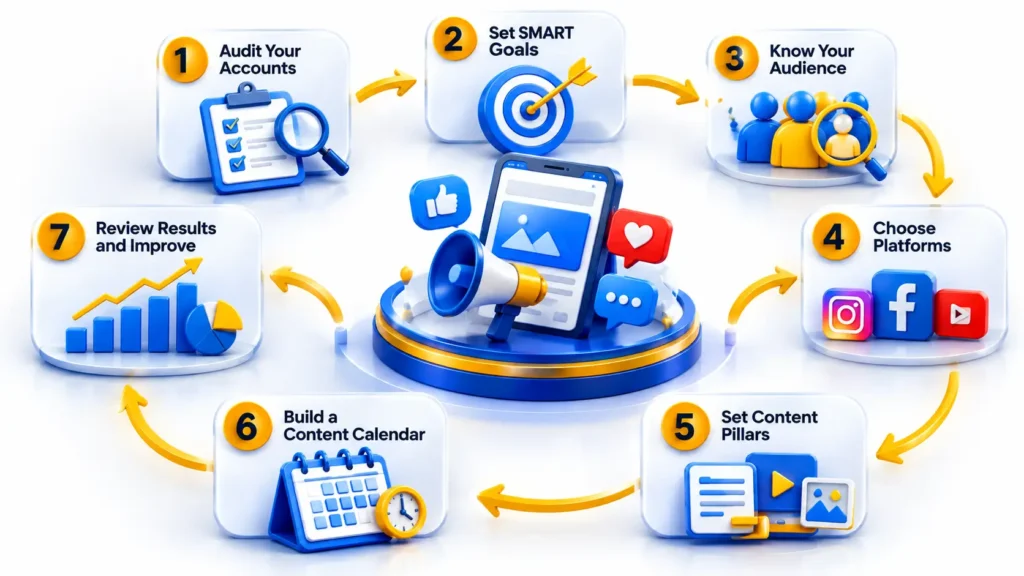
- Audit your existing accounts. Review what you have posted, what drew responses and where profiles are incomplete or inconsistent.
- Define two or three SMART goals tied to business results.
- Research your audience and write short personas.
- Choose platforms based on audience behaviour and your capacity.
- Set content pillars and decide which formats you will use for each.
- Build a content calendar covering at least the next month.
- Review results monthly, keep what works and change what does not.
A social media audit comes first because it shows what already exists. The monthly review closes the loop and turns the plan into a cycle instead of a one-time document.
Social Media Strategy for Local Businesses in Kochi
Local businesses compete for attention in a specific area, so their strategy should reflect local customers and local behaviour. Retailers, clinics, training institutes and service providers in Kochi can start by asking which platforms nearby customers use, which questions they send and which offers they respond to.
Local content works well when it shows real products, real staff and real services. Seasonal events and local festivals can anchor campaign themes, provided the content still connects to a clear business goal. Pair it with consistent business details across your profiles and website, so customers can find the right address, hours and contact information. Reviews and customer messages also deserve a place in the plan, because they influence decisions before a customer ever visits.
Social media marketing in Kochi combines these local factors with the standard strategy elements above: goals, audience, content, calendar and measurement.
Working With a Marketing Partner
Some businesses build the plan in house, while others hire a digital marketing agency in Kochi to manage planning, content and reporting. Either route works if responsibilities are clear.
When comparing partners, ask about the services included, how approvals work, which metrics appear in reports and who owns the accounts and content. Dotcom Creativez provides digital marketing services, and an agency like it should be able to explain how each activity connects to your goals.
Common Mistakes to Avoid
Even businesses with a plan lose results through avoidable habits:
- Setting goals that cannot be measured, such as “grow the brand”
- Copying a competitor’s content without checking whether it suits your audience
- Posting on every platform instead of the two or three that matter
- Reporting likes and followers while ignoring enquiries and sales
- Never revising the plan after the first month
- Leaving comments and messages unanswered
Frequently Asked Questions
What is the difference between a social media strategy and a content calendar?
A strategy explains why you post, for whom and how you will measure results. A content calendar is one part of it, listing what you publish and when.
How long does it take to see results from a social media strategy?
Timelines depend on your goals, budget, audience size and consistency. Paid campaigns can produce enquiries sooner, while organic growth usually builds over months. Track progress monthly instead of expecting overnight change.
How often should a business post on social media?
Frequency matters less than consistency. Choose a schedule your team can maintain, then adjust it using performance data from each platform.
Do small businesses really need a documented strategy?
Yes. A short plan with clear goals, a defined audience and a monthly calendar costs little and prevents wasted effort. It does not need to be long to be useful.
Which metrics show that a strategy is working?
Look at the metrics tied to your goals: enquiries, link clicks, bookings, conversions and cost per lead for paid campaigns. Reach and engagement help explain why those numbers move.
Should a business hire an agency or manage social media in house?
It depends on team skills, available time and budget. In-house teams know the business well, while agencies add specialist skills and capacity. Compare services, reporting and communication before deciding.
Turn Posting Into a Plan
Random posts keep a profile busy, but a social media marketing strategy keeps it useful. Clear goals, audience research, content pillars, a calendar and regular measurement turn everyday posting into a repeatable process that supports business growth.
Start small: audit your accounts, choose one or two goals and plan the next four weeks. For businesses that want support building and managing that process, Dotcom Creativez offers digital marketing services that cover planning, content and reporting.

The Dotcom Creativez team is a digital marketing team based in Kerala, helping businesses improve their online visibility and reach their target audiences. With over seven years of industry experience within its leadership, the agency provides services including SEO, performance marketing, social media marketing, content marketing, and web development. The team creates strategies based on business goals, audience needs, and market research, with a focus on generating qualified leads, increasing conversions, and supporting measurable business growth.