
AI in content marketing refers to the use of machine learning and language-generation tools to support research, drafting, editing, and distribution of marketing content. Businesses now use these systems to work faster and target audiences with more precision. This article breaks down where AI fits into each stage of the content process and how organizations can apply it without losing quality or brand voice.
AI-Assisted Content Ideation and Planning
Before a single sentence gets written, marketing teams need direction. AI content strategy tools now handle a large share of the early groundwork that used to consume days of manual research.
Audience and Topic Research
Machine learning in marketing platforms can scan search behavior, forum discussions, and competitor content to surface patterns a human researcher might overlook. This gives strategists a clearer picture of what audiences actually want to read, rather than relying on guesswork or outdated assumptions about buyer interest.
Keyword Clustering and Calendar Building
Grouping related search terms into themes used to be tedious spreadsheet work. AI SEO tools now cluster keywords automatically based on intent and semantic similarity, which speeds up the process of building a content calendar that covers a topic from multiple angles rather than repeating the same idea under different titles.
AI tools shorten the research and planning phase by processing large volumes of search data, competitor patterns, and audience signals in minutes rather than days. They surface topic gaps and content opportunities a team might miss manually. Human strategists still decide which opportunities fit the brand, the market, and the business goal, since judgment about tone, positioning, and priority cannot be automated away.
Ready to build a smarter content calendar? Get a free AI-assisted content planning session with our team.
AI in Content Production and Editing
Once a topic and angle are locked, production begins. This stage has changed the most visibly, since generative AI for content now handles a meaningful share of first-draft writing, structural editing, and reformatting work.
Drafting and Structuring
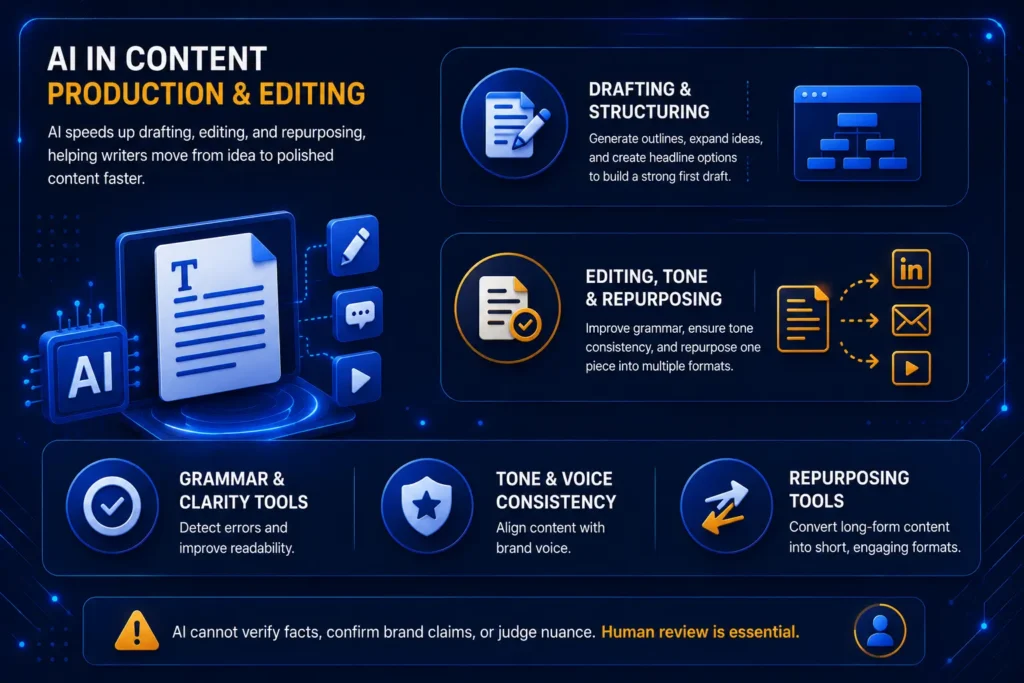
AI copywriting tools can generate outlines, expand bullet points into paragraphs, and suggest headline variations based on the topic entered. Writers increasingly use these drafts as a starting frame rather than a finished product, reshaping the language to match a specific brand’s voice and industry context.
Editing, Tone, and Repurposing
Natural language generation tools also assist with grammar correction, tone consistency, and reading-level adjustments. A single blog post can be reshaped into a LinkedIn caption, an email snippet, or a short video script far faster than doing each version manually.
- Grammar and clarity checking tools
- Tone and voice consistency assistants
- Repurposing tools that convert long-form content into shorter formats
AI speeds up drafting, grammar checking, tone adjustment, and format conversion, letting writers move from blank page to workable draft much faster than before. It cannot verify factual accuracy, confirm brand-specific claims, or judge whether a tone fits a sensitive audience. Editorial review by a person familiar with the brand and the subject remains essential before anything gets published, since machine output can sound confident while still being wrong.
Need editorial-grade AI content production support? Talk to us about setting up an AI-assisted writing workflow.
AI for Content Performance and Distribution
Publishing content is only half the job. What happens after a piece goes live determines whether the earlier planning and production effort actually pays off.
Scheduling and Channel Selection
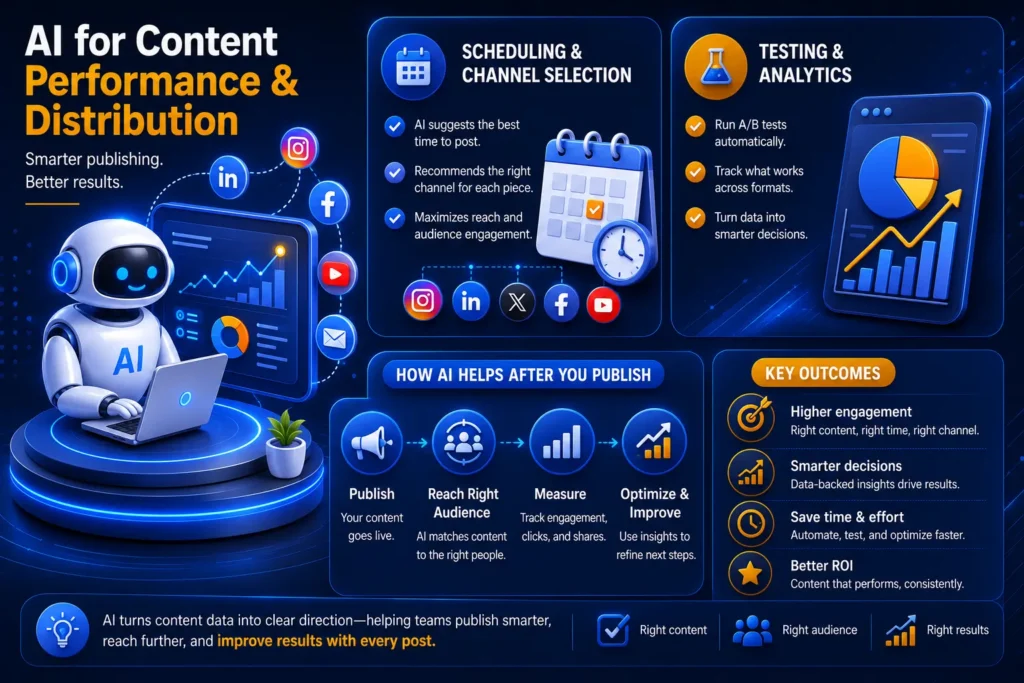
AI-powered marketing platforms can recommend the best times to post based on when a specific audience segment historically engages most. They also help decide which channel deserves a given piece of content, since not every article suits every platform equally.
Testing and Analytics
Predictive content analytics tools track engagement patterns across formats and flag which headlines, images, or calls to action perform better through automated A/B testing. This data then feeds back into future planning, closing the loop between what was published and what should be published next.
AI supports scheduling, channel targeting, split testing, and performance tracking once content goes live, drawing on historical engagement data to time posts and match content to the right platform. Analytics dashboards then translate raw engagement numbers into clear signals about what resonates, letting teams refine targeting and adjust future content decisions based on evidence rather than assumption.
Curious how AI can sharpen your content distribution? Explore our AI-powered content distribution services.
Where This Fits Into a Broader Growth Strategy
Content marketing rarely operates in isolation. It connects directly to SEO performance, marketing automation, and the overall customer experience a brand delivers across channels. Readers who want a wider view of how these pieces fit together, from paid campaigns to customer journey mapping, may find it useful to read our companion guide, AI in Digital Marketing: A Complete Guide to Scaling Growth, which expands on these connections in more depth.
Frequently Asked Questions
Does AI in content marketing replace human writers?
No. AI handles drafting speed, research, and repetitive editing tasks, but human writers and editors remain responsible for accuracy, brand voice, and judgment calls that machines cannot reliably make.
What types of businesses benefit most from AI content tools?
Any business publishing content regularly benefits, including e-commerce brands, clinics, edtech companies, and service providers. Businesses with limited content teams often see the biggest time savings.
Is AI-generated content penalized by search engines?
Search engines do not penalize content simply because AI assisted in producing it. They evaluate whether the content is helpful, accurate, and well-structured, regardless of the tools used to create it.
When in the content process should a business start using AI?
AI can support every stage, from initial research through post-publication analysis. Most businesses see the fastest returns by starting with research and repurposing before moving into full drafting automation.
How much editing does AI-generated content usually need?
This varies by topic and tool, but most AI drafts need fact-checking, tone adjustment, and structural refinement before publishing. Treating AI output as a first draft rather than a final version produces the most reliable results.
Can small businesses afford to use AI content tools?
Many AI writing and analytics tools offer low-cost or usage-based pricing, making them accessible to small businesses. The bigger investment is often the strategic oversight needed to use these tools correctly, which is where our content marketing services can help.
Conclusion
AI in content marketing works best as a support system, not a replacement for strategic thinking. It speeds up research, drafting, and distribution, but the businesses that see the strongest results are the ones that keep human judgment in the loop at every stage. Dotcom Creativez works with businesses across Kerala to build content systems that combine AI efficiency with human editorial control, drawing on our position as the best digital marketing agency in Kerala and the best digital marketing agency in Thrissur. If your content strategy needs a structured, AI-assisted upgrade, reach out and we can map out a plan suited to your specific goals.