
Yes, a business profile now exists inside ChatGPT, though it works differently from Google Business Profile. OpenAI opened a beta called Businesses in ChatGPT on 10 November 2026, letting eligible companies claim and verify a ChatGPT business profile, update key details, and see how often they are mentioned. This guide explains what the feature offers, how it compares with Google’s listing, who can use it, and what businesses should do now.
Does ChatGPT Have a Business Profile?
Yes, with limits. A claimable profile exists in beta, but it is not a full copy of Google Business Profile.
OpenAI’s beta program, Businesses in ChatGPT, centers on a tool called Business Hub. Inside it, a company can claim its organization, verify ownership, and, once verified, update key details and add self-service product feeds with pricing and availability.
Verified profiles can carry a blue checkmark showing that the actual business manages them. Business Hub also reports how often ChatGPT mentions the business and how many people click through to its website.
The program is new and still in beta, so details can change. Check OpenAI’s own announcement for current eligibility and features.
How Did ChatGPT Learn About Businesses Before This Beta?
Before the beta, businesses had no first-party way to correct what ChatGPT said about them. Answers came from web pages the system could find, from its training data, and, according to third-party reports, from licensed listing data that OpenAI does not fully describe.
That left outdated hours, wrong service descriptions, and missing details as possible risks. Business Hub gives owners a direct place to fix core facts, although the pages ChatGPT cites still shape many answers.
How Does a ChatGPT Business Profile Compare With Google Business Profile?
The two serve different platforms and work differently. These are the main distinctions:

- Purpose: Google Business Profile powers listings in Google Search and Maps, while a ChatGPT profile supplies details ChatGPT may use in its answers.
- Focus: Google emphasizes local listings with maps, reviews, photos, and posts, while the ChatGPT beta emphasizes business details, product feeds, and engagement counts.
- Reporting: Google provides performance data inside its own tools, while Business Hub reports mentions, profile views, website clicks, and discovery topics.
- Maturity: Google Business Profile is established, while Businesses in ChatGPT launched in beta in November 2026.
- Eligibility: OpenAI says access depends on industry, location, and its verification and integrity checks.
Treat the ChatGPT profile as an addition, not a replacement. Google Business Profile still matters for Google Search, Maps, AI Overviews, and AI Mode.
Who Can Claim a Business Profile in ChatGPT?
OpenAI says any eligible business located where ChatGPT is available can claim a profile through Business Hub. The person claiming must own the business or have authority to represent it.
Eligibility still depends on industry, location, and OpenAI’s checks. Early reports describe at least one claim outside the initial launch market being placed on a waitlist. Local shops and restaurants may face extra limits during the beta, so check Business Hub for your category.
How Verification Works
Verification varies by business. Reports describe confirmation through a business phone number, email address, website domain, or Shopify account, followed by an identity check with government-issued ID before a person can edit details or publish an agent.
Is It Free?
OpenAI’s launch materials mention no fee for claiming a profile or viewing insights. Pricing for sponsoring an agent through ChatGPT Ads is a separate matter, and OpenAI has not published details beyond its existing ad formats.
What Can You Do Inside Business Hub?
- Claim and verify the business profile.
- Update key details such as website, description, logo, and policies.
- Add product feeds with prices and availability.
- View aggregated mentions, website clicks, and discovery topics, which are common themes in conversations where the website is cited.
- Build and publish a Business Agent, where eligible.
OpenAI says it does not share users’ conversations or Business Agent chats with businesses. Insights appear only after enough conversations meet certain thresholds, so small businesses may see little data at first.
The dashboard’s own note warns that clicks do not confirm website visits or conversions. Compare these counts with your analytics before drawing conclusions.
Will a Profile Make ChatGPT Recommend Your Business?
Not necessarily. OpenAI’s announcement does not say that claiming a profile or uploading a feed raises how often ChatGPT recommends a business, and its setup guidance says a feed does not guarantee recommendations.
When ChatGPT searches the web, what it says about a business still comes from pages it can find and cite, such as the company website, review platforms, directories, and local publications. Third-party studies suggest ChatGPT’s local answers draw on several sources, and OpenAI has not published a full list.
Accurate public information therefore remains the foundation. A claimed profile helps correct details, but it cannot replace a clear website, consistent listings, and genuine reviews. Mentions without clicks still have value as awareness, but only enquiries and sales prove business impact.
How Can Businesses Prepare for ChatGPT Discovery?
Preparation mixes old local SEO work with a few new steps:
- Check what ChatGPT currently says about your business and note errors.
- Fix the source pages: your website, Google Business Profile, Bing Places, and major directories.
- Keep name, address, phone number, hours, and services consistent everywhere.
- Claim your profile in Business Hub if your business is eligible.
- Publish clear service pages, pricing information, and answers to common questions.
- Collect genuine reviews and respond professionally.
- Track referral traffic from ChatGPT in Google Analytics 4.
A Monthly ChatGPT Visibility Check
Run the same checks each month and record the results:
- Ask five customer-style questions about your services.
- Note whether ChatGPT names your business and what it says.
- List the sources ChatGPT cites and fix any errors found.
- Compare Business Hub counts with analytics sessions and enquiries.
- Record changes so improvements and gaps become visible over time.
For more on how AI search changes visibility, read our guide to how Google AI Mode is transforming SEO for businesses. Brand mentions and reviews can also influence AI answers, as our article on common off-page SEO mistakes explains.
What Mistakes Should Businesses Avoid?
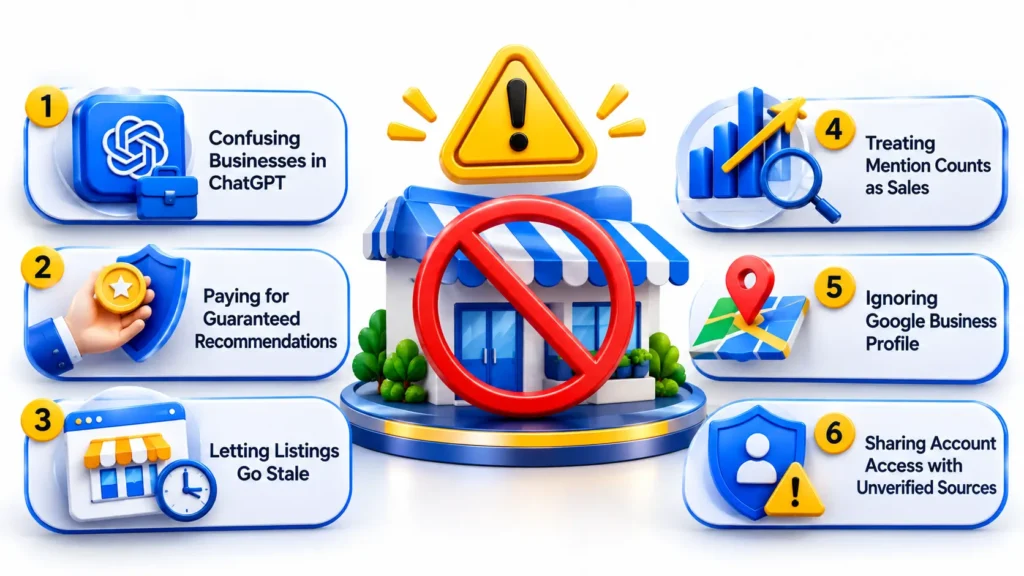
- Confusing Businesses in ChatGPT with the ChatGPT Business subscription, which is a separate workplace product.
- Paying a third party who promises guaranteed ChatGPT recommendations.
- Letting listings on other platforms go stale after claiming one profile.
- Treating mention counts as sales instead of checking analytics and enquiries.
- Ignoring Google Business Profile because a new platform has launched.
- Sharing account access with unverified agencies or tools.
What Should Local Businesses in Thrissur Do?
Many local customers still start with Google Search and Maps, so keep Google Business Profile complete and active. Add the newer channels gradually: confirm that business details are correct wherever ChatGPT may look, and claim the profile in Business Hub when your category qualifies. Keep service pages specific to what the business offers locally.
A digital marketing agency in Thrissur can help audit listings, location pages, and review management, and it should explain how it measures AI-driven visibility without promising recommendations. Dotcom Creativez is one of the providers a business can assess on those points.
Frequently Asked Questions About ChatGPT Business Profiles
Is the ChatGPT Business plan the same as claiming a business?
No. ChatGPT Business is a workplace subscription. Claiming a business in Business Hub manages how a company appears in other people’s ChatGPT answers, and the two are separate products.
Does ChatGPT use Google Business Profile data?
Reports from local SEO firms say ChatGPT has no direct integration with Google Business Profile. Third-party studies report that other sources appear more often in ChatGPT local answers, so keep Google’s listing accurate as the master copy and verify other listings against it.
Can a business pay to appear in ChatGPT answers?
Sponsored placements exist through ChatGPT Ads, and OpenAI says they are clearly labeled and separate from ChatGPT’s responses. Unpaid mentions cannot be bought, so be cautious of anyone selling guaranteed recommendations.
What are Business Agents?
Business Agents are branded chat assistants that answer questions using a company’s product and policy information. They are labeled, separate from ChatGPT’s own answers, and limited at launch to eligible ecommerce and online service businesses in OpenAI’s initial market.
Is a claimed profile worth it for a small business?
It can be, if your business qualifies. OpenAI mentions no fee, lets you correct the facts ChatGPT may show, and provides first-party counts for mentions and clicks. Expect modest data at first, and keep investing in your website and local listings.
How can businesses in Thrissur check what ChatGPT says about them?
Ask ChatGPT questions a customer might ask, such as services, pricing, and hours, and review which sources it cites. Correct errors at the source pages, then repeat the check monthly and note changes.
What Businesses Should Take From This
A ChatGPT business profile now exists in beta, but it supplements Google Business Profile rather than replacing it. Claim the profile if your business is eligible, correct the public pages ChatGPT may cite, and judge results by enquiries and sales, not mention counts alone. Businesses that want help with listings and measurement can consider providers such as Dotcom Creativez, then choose one that makes no guarantees about AI recommendations.

The Dotcom Creativez team is a digital marketing team based in Kerala, helping businesses improve their online visibility and reach their target audiences. With over seven years of industry experience within its leadership, the agency provides services including SEO, performance marketing, social media marketing, content marketing, and web development. The team creates strategies based on business goals, audience needs, and market research, with a focus on generating qualified leads, increasing conversions, and supporting measurable business growth.