
Google AI Mode answers complex questions with a conversational, AI-written response that links out to supporting websites. For businesses, that changes how people discover brands, how pages earn visibility, and how teams measure SEO results. This guide explains how the feature works, what it changes in search behavior, which SEO practices still matter, and how to adapt content, local presence, and reporting without chasing shortcuts or unproven tricks.
What Is Google AI Mode?
AI Mode is a Search experience from Google that uses Gemini models to handle longer, multi-part questions in a conversational format. Users type or speak a question, receive a synthesized answer, and ask follow-up questions without starting over.
It differs from AI Overviews, which appear at the top of regular results for some queries. AI Mode runs as a dedicated, more interactive space for exploration, comparison, and planning.
Google introduced AI Mode as a Search Labs experiment in March 2025 and has expanded it since, so features and availability can change. Check Google’s current documentation before building plans around a specific feature.
How Does AI Mode Find and Choose Sources?
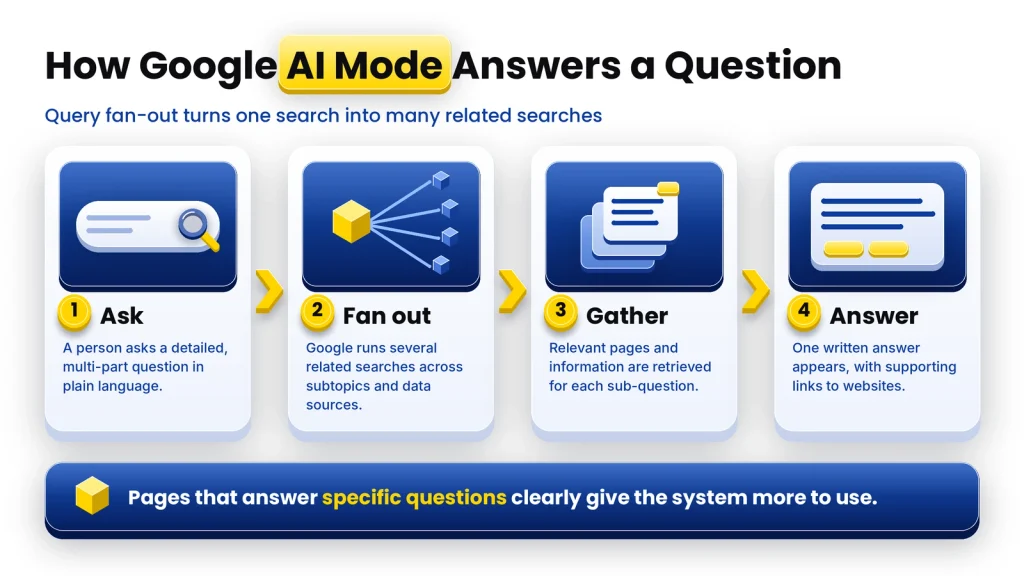
Google’s documentation says that AI Overviews and AI Mode may use a technique called query fan-out. Instead of running one search, the system issues several related searches across subtopics and data sources, then combines what it finds into a single answer.
The practical effect is simple. A page can contribute to one sub-question without being the top result for the original query. Pages that answer specific, clearly framed questions give the system more material to use.
How Does It Differ From Traditional Search?
Traditional results rank pages for a single query. AI Mode shapes a full answer around a conversation. The key differences appear below.
- Input: short keywords in classic search, longer natural-language questions in AI Mode.
- Output: a ranked list of links versus a written answer with supporting links.
- Journey: one query per search versus follow-up questions in a single session.
- Visibility: position on a page versus inclusion and mention within an answer.
- Measurement: rankings and clicks versus impressions, citations, and business outcomes.
Both draw on Google’s search index, so pages must still be indexable to appear in either.
What Is Changing for Businesses?
Four shifts stand out for companies that depend on organic search.
Longer, More Conversational Queries
Users now phrase searches as full questions with context, such as budget, location type, or comparison criteria. Content that mirrors those detailed questions in plain language has a better chance of matching them.
Visibility Without a Click
A brand can appear in an answer and still receive no visit. Impressions and citations gain importance, while click-through rate alone gives an incomplete picture. Measure enquiries, calls, and sales, not clicks only.
Higher Standards for Original Content
Generic summaries add little when an AI system can produce one instantly. Original research, firsthand expertise, clear pricing, and specific product or service detail give a page a reason to be cited.
Local and Brand Signals Matter More
Questions with local intent, such as finding a service nearby, can draw on business listings, reviews, and website details. Accurate Google Business Profile information, consistent contact details, and genuine reviews strengthen those signals.
These shifts do not require abandoning proven SEO. They require widening the goal from ranking one page to being useful across a whole topic.
Which SEO Fundamentals Still Matter?
Google’s guidance states that no special optimization is required for AI features, and that standard SEO best practices still apply. To appear as a supporting link, a page must be indexed and eligible to show a snippet in Search.
Focus on these fundamentals:
- Crawlable, fast, mobile-friendly pages with clean internal links.
- Helpful, people-first content written by identifiable experts.
- Clear headings, direct answers, and well-organized sections.
- Structured data that matches the visible text on the page.
- Original images, video, and data where they add value.
- Strong brand reputation through reviews, mentions, and quality backlinks.
Read Google’s guide to AI features and your website for the official details.
Technical Checks Before Rewriting Anything
Confirm these basics first, because content changes cannot help a page that Google cannot use.
- Googlebot can crawl the page and no noindex tag blocks it.
- Snippet controls such as nosnippet or max-snippet do not limit it by accident.
- Important text appears in HTML, not only inside images.
- Canonical tags point to the correct version of each page.
- Page speed and mobile layout work properly.
How Should Businesses Adapt Their Content?
Map the questions behind each core topic. For a service page, that may include pricing, process, timelines, comparisons, risks, and eligibility. Cover them in clear sections instead of scattering them across thin pages.
Place a concise answer near the top of each section, then add detail, examples, and evidence. Readers and AI systems can both pull the key point quickly.
Support claims with named sources, publish author details, and update pages when facts change. Trust signals help users decide whether a page deserves attention.
Content Formats That Suit Complex Questions
Formats that cover a topic in depth help most:
- Buying guides that explain options and trade-offs.
- Pricing and process pages written in plain language.
- Comparison pages that treat alternatives fairly.
- FAQ sections that answer real customer questions.
- Original studies, calculators, and video demonstrations.
A Seven-Step Preparation Process
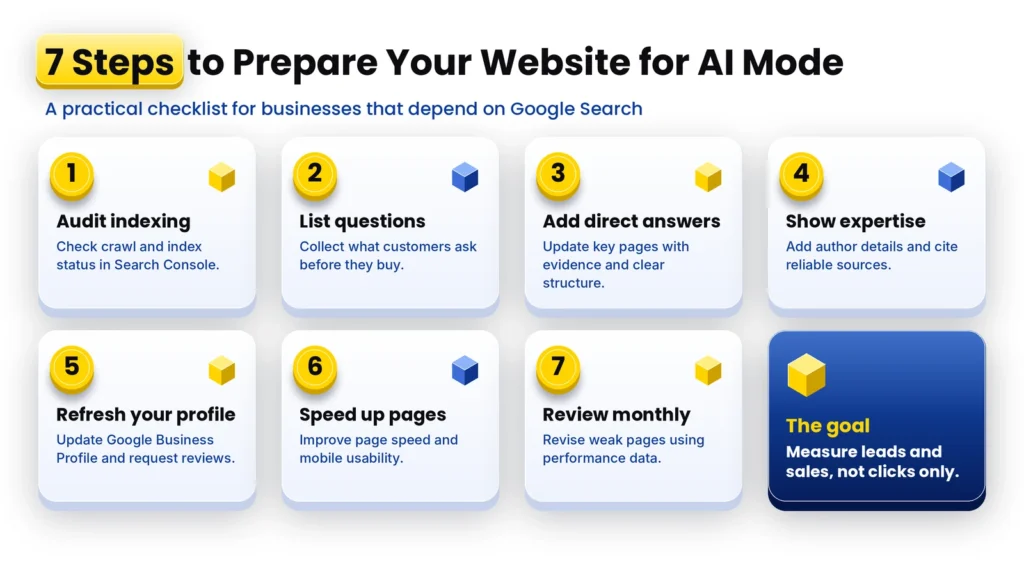
- Audit crawl and index status in Search Console.
- List the questions customers ask before buying.
- Update key pages with direct answers, evidence, and clear structure.
- Add author details and cite reliable sources.
- Refresh Google Business Profile details and request reviews.
- Improve page speed and mobile usability.
- Review performance monthly and revise weak pages.
How Can Businesses Measure AI Mode Results?
Google counts AI Mode clicks, impressions, and position within the Web search type in Search Console, so the data blends with other organic results. In June 2026, Google also added dedicated generative AI performance reports that show impressions from AI Overviews and AI Mode.
Track these signals together:
- Search Console impressions and clicks for priority pages.
- Google Analytics 4 conversions and engagement from organic search.
- Branded search growth, which suggests rising awareness.
- Calls, form submissions, and direction requests from Google Business Profile.
- Lead quality and sales from organic visitors.
Impressions in AI answers do not equal clicks. Judge success by business outcomes, and review trends monthly rather than reacting to daily swings.
What Should Local Businesses in Kochi Do?
Many business searches carry local intent, and AI answers can compare nearby providers. A business should keep its Google Business Profile complete, choose accurate categories, add current photos, and respond to reviews professionally.
Service pages should state what the business offers, who it serves, and how customers can reach it. Businesses can ask providers how they handle local landing pages, citations, and review management. A digital marketing agency in Kochi should also explain how it measures AI-era visibility without promising rankings.
Dotcom Creativez is one of the providers businesses can evaluate on these points, alongside their reporting, experience, and transparency.
Which Mistakes Should Businesses Avoid?
- Rewriting every page with AI tools and no human expertise.
- Treating AI visibility as a separate trick instead of building on core SEO.
- Ignoring technical problems that block crawling or indexing.
- Publishing thin pages for every possible question variation.
- Buying AI-visibility packages that promise guaranteed citations.
- Measuring success only by clicks.
Frequently Asked Questions About Google AI Mode
Is AI Mode the same as AI Overviews?
No. AI Overviews appear within standard results for some queries, while AI Mode is a separate conversational experience for deeper questions and follow-ups. Google’s documentation covers both under its AI features guidance.
Does AI Mode make SEO obsolete?
No. Pages still need to be crawlable, indexed, helpful, and trustworthy to appear as supporting links. SEO now includes broader topic coverage, original content, and measurement beyond rankings.
Will AI Mode reduce website traffic?
Effects vary by query type and industry, so avoid fixed predictions. Questions fully answered inside the response may send fewer visits, while searches that need detail, pricing, or a purchase still depend on source pages. Track your own data instead of relying on averages.
What content helps a page support AI answers?
Pages that answer specific questions clearly, show expertise, cite sources, and include original information give the system useful material. Thin, repetitive, or copied pages offer little to add.
Should small businesses worry about AI Mode?
Small businesses should prepare rather than worry. Accurate business profiles, helpful service pages, and genuine reviews support both classic and AI-driven search. Focus on fundamentals before experimenting with new tactics.
How can Kochi businesses prepare for AI-driven local search?
Keep Google Business Profile details accurate, collect genuine reviews, publish clear local service pages, and make contact information consistent across the website and directories. Track calls and enquiries from search.
What Businesses Should Do Next
Google AI Mode changes how people ask questions and how answers present sources, yet the foundation of good SEO stays the same: crawlable pages, helpful content, trusted brands, and accurate local information. Businesses should cover customer questions in depth, measure outcomes beyond clicks, and avoid guaranteed-visibility offers. Those who want expert help can consider providers such as Dotcom Creativez, then choose one that explains its methods and reporting clearly.

The Dotcom Creativez team is a digital marketing team based in Kerala, helping businesses improve their online visibility and reach their target audiences. With over seven years of industry experience within its leadership, the agency provides services including SEO, performance marketing, social media marketing, content marketing, and web development. The team creates strategies based on business goals, audience needs, and market research, with a focus on generating qualified leads, increasing conversions, and supporting measurable business growth.