
Every brand posting on social media faces the same three problems: producing enough content, knowing what audiences actually think, and answering customer questions fast enough to matter. AI in social media marketing addresses all three by processing information and generating output far quicker than any manual workflow could manage. This piece breaks down what that looks like in practice, from content generation to sentiment tracking to chatbot-driven sales, so business owners can judge where automation genuinely helps.
Producing Social Content Without the Usual Bottlenecks
Generative tools now draft caption options, suggest hashtag combinations, outline short video scripts, and sketch visual directions in a fraction of the time a human team would need starting from scratch. This matters because content volume requirements have climbed steadily, and few internal teams can keep pace without extra help. The technology doesn’t decide what a brand should say, but it clears the mechanical part of production so people can focus on judgment calls.
Generating Caption Options and Copy Angles
A writing tool can turn out several caption directions for the same post almost instantly, which makes testing tone and phrasing realistic even for a team without a dedicated copywriter.
Building Visual and Video Concepts Faster
Image and video tools let a team try out different visual directions before committing to a final design, cutting the back and forth that usually slows down approvals.
Protecting Brand Voice Inside Automated Workflows
Anything generated still needs a human read-through before it goes live, since AI output tends to drift toward flat, generic phrasing without guidance. A written style reference helps these tools produce closer-to-usable drafts from the start.
Practical examples of what this covers include:
- Multiple caption drafts for split testing
- Storyboards and scripts for reels and shorts
- Hashtag groupings tied to current search trends
- Rough visual mockups for early creative review
- Repurposed content ideas pulled from top-performing posts
For a complete breakdown of how artificial intelligence is reshaping every corner of digital marketing, read what AI in Digital Marketing.
Understanding What Audiences Are Actually Saying
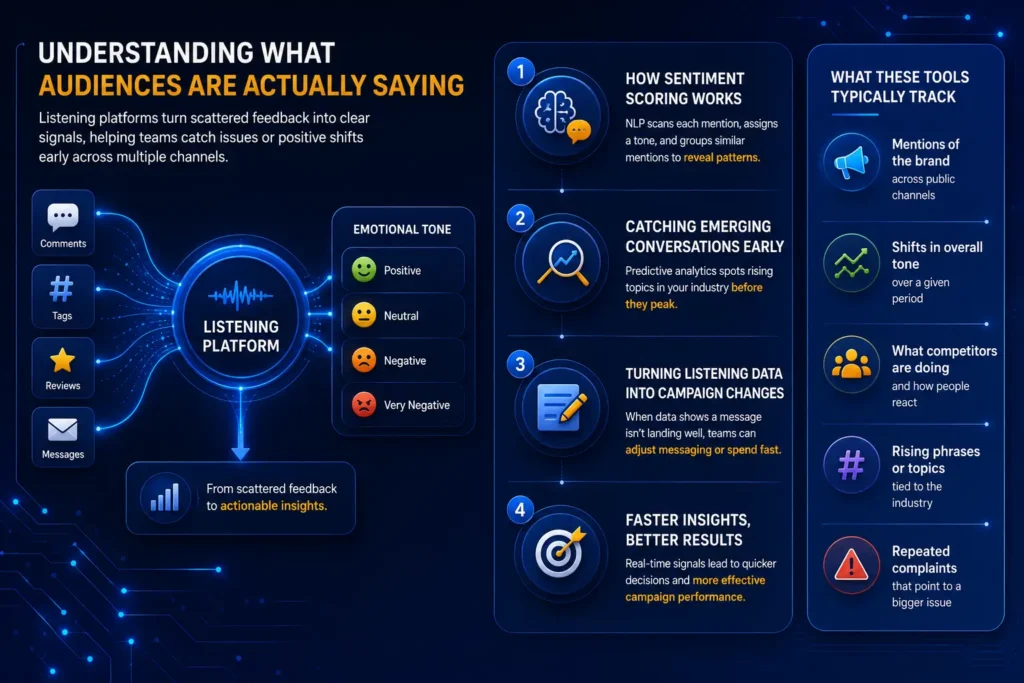
Listening platforms pull in comments, tags, reviews, and inbox messages, then sort the emotional tone behind each into categories a human can scan quickly. That sorting turns a flood of scattered feedback into a readable signal, which lets a team catch a brewing issue or a positive shift long before it becomes obvious through normal channels. Doing this by hand across several platforms at once simply isn’t realistic for most teams.
How Sentiment Scoring Actually Functions
Natural language processing scans the wording in each mention and assigns it a tone, then groups similar mentions together so a cluster of complaints about one issue becomes visible as a pattern rather than scattered noise.
Catching Emerging Conversations Early
Predictive analytics inside these platforms can surface a rising topic connected to a brand’s industry before it peaks, giving a team a chance to respond while it still matters.
Turning Listening Data Into Campaign Changes
Once the data shows a message isn’t landing well, a team can adjust the wording or shift ad spend the same day rather than waiting on a scheduled report.
What these tools typically track:
- Mentions of the brand across public channels
- Shifts in overall tone over a given period
- What competitors are doing and how people react
- Rising phrases or topics tied to the industry
- Repeated complaints that point to a bigger issue
Talk to Dotcom Creativez about setting up a listening system that flags problems before they spread.
When Chat Windows Turn Into Sales Channels
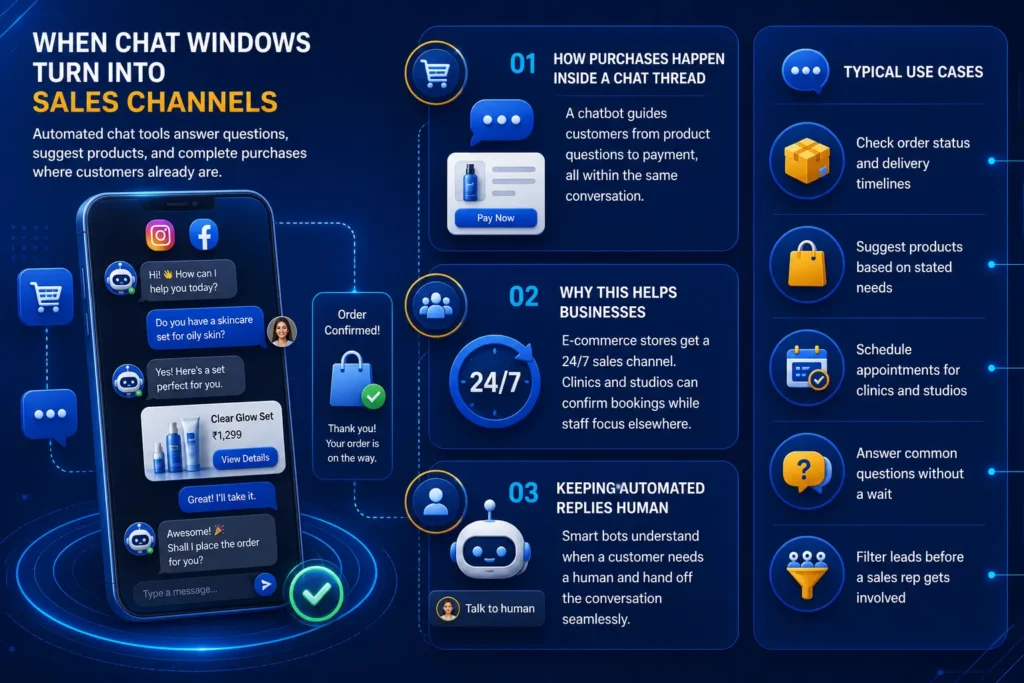
Automated chat tools built into Instagram and Facebook can field product questions, suggest items based on what a customer has already asked about, and walk someone through checkout without a staff member typing a reply. Businesses fielding the same repeated questions gain the most, since those interactions stop eating into staff time. The exchange happens where the customer already is, so there’s no redirect to lose them along the way.
How Purchases Happen Inside a Chat Thread
A chatbot connected to a business account can guide someone from a product question straight through to payment, all inside the same message thread the conversation started in.
Why This Helps E-Commerce and Service-Based Businesses
Online sellers gain a channel that keeps working outside business hours, while clinics and studios use the same setup to confirm bookings without pulling staff away from other work.
Keeping Automated Replies From Feeling Robotic
A bot that traps a customer in rigid menu options tends to frustrate rather than help. Better setups recognize when a question needs a person and hand it off without delay.
Typical use cases include:
- Checking order status and delivery timelines
- Suggesting products based on stated needs
- Scheduling appointments for clinics and studios
- Answering common questions without a wait
- Filtering leads before a sales rep gets involved
Curious what a chatbot could handle for your business? Reach out and we’ll map it out.
Where This Shift Actually Changes Outcomes
E-commerce sellers depend on social channels for both discovery and closing sales, so faster content and instant replies show up directly in revenue. Small businesses often gain the most in relative terms, since one well-built automated workflow can absorb hours of work an owner would otherwise squeeze in after closing time. Edtech providers use chat tools to answer admissions questions at hours when staff aren’t available, which matters given how many prospective students browse late at night. Health clinics use the same booking and FAQ handling to cut down on missed calls and repetitive front-desk work.
Few businesses have all three of these systems built in-house, which is why outside specialists get hired to set them up. Agencies known as the best digital marketing agency in Kerala and the best digital marketing agency in Thrissur tend to already run content, listening, and chatbot work as one connected service, sparing an owner the task of coordinating separate vendors for each piece.
What to Watch Before Turning Everything Over to AI
Speed doesn’t equal correctness. A generated caption can misjudge context, a chatbot can misread an odd question, and sentiment software can misclassify sarcasm or industry slang. None of that makes these tools unusable, but someone still needs to check output at the points that matter most.
Tone consistency is the other risk worth naming. Left unchecked, AI-written copy tends to flatten into something generic, so a team member should compare output against the brand’s established voice before anything goes live. Skipping that step tends to create more cleanup work later than it saves upfront, especially on channels customers use to judge how a business communicates.
Where to Begin Without Overhauling Everything at Once
There’s no need to adopt every tool simultaneously. A sounder approach picks one specific task, runs it for several weeks, and only expands once the results justify the investment.
Sensible starting points:
- Trying an AI writing tool for first-draft captions before editing
- Setting up a simple chatbot for order status and common questions
- Running sentiment tracking for a month to see where problems actually cluster
Narrowing the scope keeps the process manageable and makes it obvious what’s paying off before spending more.
Common Questions About AI in Social Media Marketing
Will AI take over the marketer’s job entirely?
Not in any complete sense. AI manages repetitive execution work like drafting posts or replying to routine questions, while a person still needs to set direction and make creative calls.
What’s a realistic budget for adding AI tools to a social strategy?
Pricing spans a wide range, from inexpensive writing assistants to more capable chatbot and listening platforms billed monthly. Most businesses test one lower-cost tool first and expand once they see a measurable return.
Which platforms currently handle this kind of automation best?
Instagram, Facebook, and LinkedIn currently have the most developed support for chatbots and analytics, largely because of how their business tools are built. Other platforms are adding similar features but haven’t caught up yet.
How soon should a business expect to see results?
Chatbot-related improvements in response time show up almost immediately after setup. Benefits tied to content or sentiment data typically take a month or two, since they depend on gathering enough interaction data to spot real patterns.
Does using AI to write posts hurt visibility or get flagged by platforms?
Platforms don’t penalize a post for being AI-assisted. What actually matters is whether it breaks rules around spam or manipulated engagement, and that standard applies the same way regardless of who or what wrote the caption.
Is this only useful for bigger companies with marketing departments?
Smaller businesses frequently benefit more in relative terms, since they usually don’t have the staff to manage content, monitoring, and replies manually at the same volume larger competitors handle. One well-chosen tool can meaningfully close that gap.
Where This Leaves Business Owners
AI in social media marketing isn’t a single purchase or a switch flipped once. It’s an ongoing shift in how posts get made, how audience reaction gets tracked, and how a chat window turns into a completed sale, each happening faster than a manual process allows. The businesses that benefit most treat these tools as support for their team’s judgment, not a stand-in for it.
Dotcom Creativez helps businesses across Kerala put these pieces together without losing the oversight that keeps a brand sounding like itself. There’s no requirement to get everything right immediately, just a willingness to test one piece, watch what happens, and adjust as both the tools and the audience continue to change.